FAMILY: RUTACEAE
$200 pesos (rooted cutting)
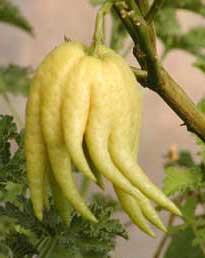 BUDDHA’S HAND CITRON, MANO DE CHANGO: A large, fingered, yellow fruit with a rind of strong lemon scent and taste and no (or very little) flesh, seeds or juice. This citrus has large, fragrant, white flowers on a rapidly growing tree and will usually flower and fruit in the first year of growth. The original specimens are believed to be from Northeastern India and were possibly the first citrus brought to Europe by the ancient Greek and Roman explorers.
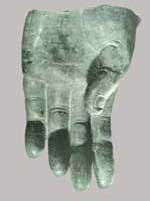
The dried fruit has been used by the Chinese and Japanese for perfuming rooms and selected fruits (those with the “fingers” closed to resemble a praying hand) may be used as religious offerings in Buddhist Temples. The peel is used as “zest” in Western cuisine.
The name of this citrus is a good example of cultural differentiation between Mexico and South East Asia. In SE Asia, the plant is called “Buddha’s Hand” (a sacred hand) and here in Mexico it is called “Mano de Chango,” (monkey hand).
This fruit is given as a religious offering in Buddhist temples. It is believed that Buddha prefers the fingers of the fruit to be closed rather than open as closed fingers symbolize the act of prayer. I like the open fingered version.
#citrusmedica #manodebuda #buddhashandlemon #buddhashandcitron
RETURN TO MAIN CATALOG