EXOTIC PLANTS OF MEXICO

The “Healthy” Tequila Plant

CBC News

Tequila has been called Mexico’s contribution to the world of alcoholic beverages. But the drink’s key ingredient might also provide a health-care breakthrough.

Mexican researchers believe the blue agave plant that produces tequila also contains compounds that could deliver drugs to the colon, making it possible to treat everything from colon cancer to colitis.
(more…)

ENTADA RHEEDII

ENTADA RHEEDII

FAMILY :: FABACEAE (LEGUMINOSAE)
Liane staub, liane sabre, m’fure m’fure, Sea Bean, African Dream Herb: A very large liana growing to more than 100 meters long bearing large, woody seedpods up to 2 meters long with a number of large, dark brown, 10 cm diameter seeds inside. These seeds have an air pocket within that allows them to float for long periods of time, ensuring their wide distribution thoughout Africa and South East Asia.
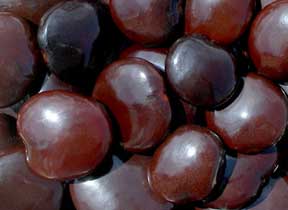
Entada rheedii beansThe seeds are used decoratively and purportedly as a dream enhancer. Supposedly the powdered seeds are smoked for this effect.

Cultivation is easy in tropical climates. Germination is easily achieved by nicking the side of the seed opposite the germ and soaking it for a day or so in water. Then, after planting about 2-5 cm deep in well-drained soil, the seeds sprout in as little as 2 weeks. The vines grow very quickly after that.

This is a new plant here for us at XPlanta and it is growing well but it will probably be a year or more before we can provide more information on the cultivation of this plant. 4 out of 5 seeds that we had obtained germinated and are doing great.

JUSTICIA PECTORALIS

JUSTICIA PECTORALIS

FAMILY :: ACANTHACEAE
A tender, aromatic, spreading ground cover to 2-3′ tall from the upper Amazon. Normally grows along sandy stream banks in rich soil. As curia, it is an aromatic additive to a Venezuelan lickable tobacco preparation called chimó. In Central America and the Carribean Islands, it is dried and snuffed or smoked along with Cannabis sativa as an aphrodisiac.

JUSTICIA PECTORALIS v. stenophylla

JUSTICIA PECTORALIS v. stenophylla

FAMILY :: ACANTHACEAE
A lower growing, yellowish-green leafed variety of the previous listing, this one with the flavor of vanilla and anise. An admixture to Amazonian epená snuffs by the Waiká Indians. This variety is a bit more difficult to grow than the previous. Very tender.

ALTERNANTERA LEHMANNII

ALTERNANTERA LEHMANNII

FAMILY :: AMARANTHACEAE
PICURULLANA-QUINA: An easy to grow (though tender to frost) tropical Ayahuasca admixture of the Ingano tribe of Colombia. It is a small shrub to 2 or 3′ tall with reddish/green leaves (red on the bottom and green on top) and red stems with ¼” white, star-ball like flowers.

RHUS DIVERSILOBA

RHUS DIVERSILOBA

FAMILY :: ANACARDIACEAE
POISON OAK: A very pretty shrub or vine with shiny dark green, leathery leaves turning bright red in the fall. Reputed to be a stimulant, but I haven’t tried it. Foliage is very poisonous to the touch for many people. The smoke from burning poison oak can cause blindness or lung complications. I used to be very susceptible to poisoning from this plant until an old woman who lived down the road from me told me how people in her tribe kept from being affected by it. She said that in the early spring they would chew the stems. (Usually I treat with caution any such information from people whose ancestors my ancestors had tried
to annihilate, but we were long-time friends.)

Since I was sensitive to it (not to mention not being as macho at the thought as I would have liked) I devised my own method: In the early spring I would take small new-growth buds and put a few in peanut butter sandwiches. These I ate one a day for a week. Now whenever I’m exposed to it I get it rarely, and then only mildly. If you try any method such as the two previous, you’re on your own and don’t say that you read it here.

Native Californians used the stems in their basketry; the black dye produced from the bruised stems was also used in tattooing. If their ritual of tattooing was anything like that of today’s, they were probably whacked out of their skulls anyway. The sap was used to remove
warts.

As an aside, “poison oak” is a term the local rednecks in some parts of California use to describe “outsiders” who have recently (within the last 50 years) settled there. Hardy and easy to grow, if you should so desire.

CATHARANTHUS ROSEUS

CATHARANTHUS ROSEUS

FAMILY :: APOCYNACEAE
MADAGASCAR PERIWINKLE: Easily grown, tender tropical ground cover with 1½” white to rosy flowers and dark green, glossy leaves. Containing more than 70 alkaloids, this plant is the subject of investigation in the treatment of cancer, leukemia, diabetes and Hodgkin’s disease. Grow in part shade and moist, rich soil.

TABERNAEMONTANA DIVARICATA

TABERNAEMONTANA DIVARICATA

FAMILY :: APOCYNACEAE
BUTTERFLY GARDENIA, TAGAR: Tropical shrub to 2-4′ with glossy green leaves and evening-scented white flowers. The bitter roots are used medicinally in Ayurvedic medicine and for their ibogoid alkaloids. In traditional Thai medicine, extracts of this plant are used as sedatives and analgesics. May be grown as a house plant in part shade with rich, moist soil and warmth.

TABERNANTHE IBOGA

TABERNANTHE IBOGA

FAMILY :: APOCYNACEAE

IBOGA: A tropical shrub with panicles of small white/yellow/pink flowers from the West African rain forests.

Iboga plant and flowers

The yellow roots contain a number of indole alkaloids, the most active of which is probably ibogaine, which is found in the highest concentration in the root-bark. The root material, bitter in taste, causes an anaesthetic sensation in the mouth as well as a systemic numbness of the skin.

The root bark is used as a magical plant in initiatory rights of secret cults such as the Bwiti of Western central Africa. Ibogaine, the chief alkaloid in this plant is a MAO inhibitor, has psychedelic properties, and in low doses is capable of producing aphrodisiac effects. Large doses can be fatal. Ibogaine is being researched as a cure for alcoholism. Illegal in the US.

IMAGE: Ibogaine HCl Crystal Under UV, courtesy of Marko Resinovic and the Sacrament of Transmission.

“The Catholic church is a beautiful theory for Sunday, the iboga on the contrary is the practice of everyday living. In church, they speak of God, with iboga, you live God” – Nengue Me Ndjoung Isidore, ecumenical Bwitist religious leader

MORE INFORMATION:

Video about Ibogaine Treatment:
TV KPIX News Broadcast about Ibogaine

RECOMMENDED READING:

ILEX GUAYUSA

ILEX GUAYUSA

FAMILY :: AQUIFOLIACEAE
GUAYUSA: A strong stimulant with a high percentage of caffeine (up to 2%).
Guayusa is possibly contains the highest percentage of caffeine of any plant. The leaves are often boiled for use more than one time because of this high caffeine content.

It is said that drinking Guayusa tea may produce lucid dreams (The state of dreaming where you are aware that you are dreaming). Some people refer to it as the “watchman’s plant” because a person can remain aware even while sleeping.

This is a large shrub or small tree from the Amazon rain forests of Ecuador. Also used as an ayahuasca additive and internal bodily cleanser (because of its emetic properties) by some shamans before ayahuasca use. Requires more warmth and humidity to grow than Ilex paraguariensis, a similarly employed species. Tropical and it grows very well in Central Mexico, either in the ground or in large pots.

ILEX PARAGUARIENSIS

ILEX PARAGUARIENSIS

FAMILY :: AQUIFOLIACEAE
MATE, PARAGUAYAN TEA, YERBA MATE: Mate is one of the most popular stimulating beverages in South America. Contains caffeine (up to 2%) and theobromine and is somewhat stronger than coffee or tea. Mate is a tonic, nervine, diuretic and stimulant.

Yerba Mate plant

A holly, this plant is often kept trimmed to shrub size and can be grown in a tub in northern climates and either in tubs or in the ground in subtropical or tropical situations. It survives temperatures down to about 25° f.

YouTube Preview Image

Give young plants some shade. Likes humidity and heat. Needs well-drained acid soil. It is evergreen and dioecious. Currently, we have only female plants. Female plants tend to be milder in flavor, and slightly lower in caffeine than the male.

MORE INFORMATION:
http://noborders.net/mate/index.html

ILEX VOMITORIA

ILEX VOMITORIA

FAMILY :: AQUIFOLIACEAE

“They say it restores lost appetite, strengthens the stomach, giving them agility and courage in war, &c…”
— Catesby, Natural History…, 1754

YAUPON, CASSENA: A large evergreen shrub or small tree native to Southeastern US. A strong emetic, used ceremonially as the “black drink” by the Cherokee Indians. Also contains caffeine.

ACORUS CALAMUS

ACORUS CALAMUS

FAMILY :: ARACEAE
SWEET FLAG: From Central Asia, but now distributed throughout all Northern temperate and sub-tropical zones, this hardy, water-loving plant is slightly sedative (in Ayurvedic and Thai medicine), a stimulant (in American Indian medicine and the US Pharmacopœia), is used to stimulate the gastric and salivary glands universally. In larger doses, it is considered an aphrodisiac. And at 10 times the dose used by the Cree tribe as a stimulant, it has been reported to be hallucinogenic. Popular in herbal baths and formerly used as a beer and liqueur flavoring. Contains asarones which may be carcinogenic in large doses.

ACORUS GRAMINEUS

ACORUS GRAMINEUS

FAMILY :: ARACEAE
SWEET FLAG: A low growing version (8-12″) of the previous. Used by the Akha of Thailand for stomach ache. Used in Chinese medicine to treat gastritis and depression. Grow in moist soil (or in ponds) in full sun.

COLOCASIA ESCULENTA

COLOCASIA ESCULENTA

FAMILY :: ARACEAE
TARO, ELEPHANTS EAR, DASHEEN: Easily cultivated tropical Asian herb grown for its edible tuber and young shoots which are eaten as a winter vegetable. Grow in rich, moist soil or in ponds in sun or part shade. Has large heart-shaped green leaves on long stalks.

PANAX GINSENG

PANAX GINSENG

FAMILY :: ARALIACEAE
REN-SHEN, ASIAN GINSENG: Panax means “cure-all” and gingseng means “essence of the earth in the form of man.” Widely considered to be a superior adaptagen and multi-purpose tonic and aphrodisiac. Difficult to grow in thr tropics because it requires cold weather to complete its cycle.

PANAX QUINQUEFOLIUM

PANAX QUINQUEFOLIUM

FAMILY :: ARALIACEAE
XI-YANG-SHEN, AMERICAN GINSENG: Native to the cool, humus-rich woods of Canada and the Northern USA, this ginseng is widely used as a tonic and adaptagen. Its uses are somewhat different than Asian ginseng, being considered more cooling and more appropriately used by the elderly and those living in the tropics. Prefers rich, moist, acid, hardwood forest soil and about 90% shade. Dislikes heat and clay and sandy soils. The root is normally harvested after 5 or 6 years growth.

HUMULUS LUPULUS

HUMULUS LUPULUS

FAMILY :: CANNABACEAE
HOPS: Hops are hardy vines that can grow to 30′ in length. They grow best in rich, moist soil in full sun. They are diÅ“cious (separate male and female plants) and the vines die down to the ground each fall and resprout in the early spring.

Aside from the well known properties of flavoring and preserving beer, hops are used to induce sleep, ease nervous disorders and improve the appetite. Medicinally, hops are: nervine, tonic, soporific, diuretic, anodyne, antibiotic and sedative. Hops also contain estrogen (don’t tell your beer-guzzling, macho buddies). The information floating around that hops shoots can be grafted onto marijuana roots is bull.

LONICERA HILDEBRANDIANA

LONICERA HILDEBRANDIANA

FAMILY :: CAPRIFOLIACEAE
GIANT BURMESE HONEYSUCKLE: This honeysuckle is spectacular, but it’s not reliably hardy where temperatures drop below freezing often, although mature specimens have survived short temperature dips to the low 20ºs.

The evergreen leaves are leathery, dark green and up to 6″ long. The flowers are sweetly fragrant, white to yellow to orange and up to 7″ long in pairs along the stems. It has black 1″ diameter fruit. Actually, this honeysuckle looks more like a tree than a vine. It thrives in rich soil in part shade or sun in the tropics or subtropics and even in coastal or Southern California and other near subtropical regions. Origiannly from Southeast Asia.

LONICERA JAPONICA ‘Halliana’

LONICERA JAPONICA ‘Halliana’

FAMILY :: CAPRIFOLIACEAE
HALL’S HONEYSUCKLE, JIN-YIN-HUA: Called the “silver and gold flower” in China, this hardy, easily grown evergreen vine or ground cover has been used in traditional Chinese medicine for 1500 years. “Hall’s” variety was developed in New York in 1862 by George Hall as a more vigorous variety of this species.

Medicinally, a tea of the flowers is considered febrifuge, astringent, depurative, antidiarrhetic and diuretic. In practical terms, it is widely used in China to treat colds and the flu. As with most honeysuckles, it grows quite well in sun or part shade in relatively moist, acid soil, although it will survive almost anywhere. It flowers all summer with multitudes of very sweetly scented 1½” white turning yellow (or silver turning gold) flowers in pairs along the stem. The black berries are somewhat poisonous.

SAMBUCUS NIGRA

SAMBUCUS NIGRA

“The whole plant has a narcotic smell and it is not prudent to sleep under its shade.”
— Good’s Family Flora, 1854

FAMILY :: CAPRIFOLIACEAE
BLACK ELDER, RIXUS, IXUS, AKTE: A hardy shrub or small tree (growing to a maximum height of 15-30′) employed in medicine and magic since the days of ancient Egypt.

It has been used popularly as a diaphoretic, laxative, antispasmodic, diuretic and emollient. Practically, it has been used to make wine (from the berries and flowers), as a skin wash, in cosmetics, as a fine wood. All parts of the plant are said to have valuable uses. 8″ white flower clusters in mid-spring. The fruit, though small, is edible. Prefers rich, moist soil. Used in witchcraft. Also used in non-witchcraft. A great plant.

In selling poisonous, drug or witchcraft plants, I have often been criticized by “moralistic” members of the religious right and left, and have developed a considerable intolerance for the ignorance and hypocrisy of these people and their doctrines of superficial abstinence, apocalyptic license, martyred suffering and banal prudishness.

Perhaps I should explain a little further: In my life I have seen no evidence of the existence of a sentient superior being that commands worship. I believe that all beings are equal in a right to life and death. Beyond this, life can be a bitch… or not.

We are all being propelled blindly through space on this huge chunk of rock called Earth. Sometimes when I go to the top of a mountain and lie down, with my back to the earth, I feel like I need to hang on not to be spun off into space.

Religion, to me, is a coward’s approach to life: “If I make enough rules, then life will have meaning or at least easily recognizable guideposts and I won’t have to think any longer or figure it out for myself.” The tree of knowledge has been chopped down and burned to roast marshmallows.

It certainly wasn’t put to fire for the light.

It truly amazes me that throughout history, man (or woman) has constantly worshiped his/her “true” god(s) or goddess’ only to have it (or them) replaced by others as the previous are proven false. This has happened over and over. Apparently, there’s a lot of money to be made in religion.

CATHA EDULIS

CATHA EDULIS

FAMILY :: CELASTRACEAE

Khat Seed PodsQAT, JÂT, CHAT, KHAT, ARABIAN TEA: Of all the plants listed for sale in this catalog, this is probably the most controversial (in legal terms). Although it is listed in a previous edition of The Sunset Garden Book as an ornamental, there are people in power in this world who think that the effects of chewing Khat are — how do I say this diplomatically — undesirable.

According to a grant sponsored by the United Nations Fund for Drug Abuse Control, the main subjective effects of Khat use are “euphoria, improved intellectual efficiency and alertness.” The active principles are norpseudoephedrine and cathinone. It is non addictive, but excessive use can produce some symptoms of amphetamine psychosis. A synthetic diet drug related to cathinone is phenylpropanolamine.
(more…)

CHENOPODIUM AMBROSIODES

CHENOPODIUM AMBROSIODES

FAMILY :: CHENOPODIACEAE
EPAZOTÉ, AMERICAN WORMSEED, MEXICAN TEA: A very strongly flavored and scented annual or perennial (in mild areas), native to Mexico but naturalized throughout North America, Europe, and Asia. It grows in part shade or full sun to 3-4′ tall and spreads a bit too easily by seed for tidy gardeners. It is a human and animal antihelminthic (for round and hook worms). Culinarily in Mexico it is used for flavoring beans. Epazoté means “skunk stench” in Aztec.

ACHILLEA MILLIFOLIUM

ACHILLEA MILLIFOLIUM

TRUE YARROW, MILFOIL: Delicate, gray-green, feathery leaves and clusters of small white flowers on long stems. Quickly spreading by roots and seeds. Stimulant, tonic, diaphoretic, vulnerary and aromatic. Used for colds if taken at the onset of fever. Used in witchcraft for divination and spells, being called “the Devil’s plaything.” Also used for venereal and menstrual problems. Navajo Indians drink a tea of the plant or chew the stems before intercourse for its aphrodisiac properties. Stronger substitute for hops in beer brewing. Plant with caution; yarrow is a very hardy plant and spreads very rapidly.

ANTHEMIS NOBILIS

ANTHEMIS NOBILIS

ROMAN CHAMOMILE: A hardy, very pleasantly aromatic, slowly spreading ground cover with white and yellow flowers used as a tea (bitter) with strong sedative properties. Often used for nervous stomachs. An old friend of mine once said, “This is good enough to be illegal.” It’s good, but not that good. Also called Chamaemelum nobile. Sun or
part shade.

ARTEMISIA ABROTANUM

ARTEMISIA ABROTANUM

SOUTHERNWOOD, OLD MAN, LAD’S LOVE, MAIDEN’S RUIN: A southern wormwood, from the South of Europe. A woody shrub with feathery gray-green leaves and inconspicuous yellow-white flowers. Highly scented. Used as a stimulant tonic and an emmenagogue or as a moth repellent (in French: garde-robe). It is a culinary herb in Italy. Once considered to be an aphrodisiac; 19th century poets used this plant as a clandestine symbol of homosexuality. Grows to 3-4′ tall and likes full sun.

ARTEMISIA ABSINTHUM

ARTEMISIA ABSINTHUM

FAMILY :: COMPOSITAE

“There fell a great star from heaven, burning as it were a lamp….And the name of the star is called Wormwood.”
— Revelations 8:10, 11, The Christian Bible

WORMWOOD, ABSINTHE: One of my favorite herbs. Very bitter, contains thujone. Once used as a stimulant for cerebral exhaustion, as a stomachic, antiseptic, antihelminthic. Marketed commercially in Absorbine Jrâ„¢, a liniment for sprains. It’s also the main ingredient in Absinthe, the internationally demonized alcoholic distillation that “inspired” and drove many of the Impressionist Era and late 19th Century artists and writers (Van Gogh, Degas, Gauguin, Poe, Toulouse-Lautrec, Oscar Wilde, Rimbaud, Picasso, &c).
Absinthe barrel label

Written records of the use of wormwood date back to the Assyrians of 600 BC. An old Judea-Christian legend has it that Wormwood first sprang up in the trail of the serpent as s/he left Eden. The genus, Artemisia, is named for Artemis, the Greek goddess of wild nature. Large doses of this plant are poisonous: an early symptom of this poisoning is purple- tinted vision. The hardy, 3-6′ plant is easily grown in almost any situation, preferring full sun.

TO SERVE ABSINTHE:
YouTube Preview Image

TO SERVE ABSINTHE II:
YouTube Preview Image

Jade Liqueurs absinthe at the Combier distillery
YouTube Preview Image

There is a similar plant to A. Absinthum sold in Mexico and popularly used for minor medicinal treatments.

absinthe-web.jpg

MORE INFORMATION:

RECOMMENDED READING:

ARTEMISIA AFRA

ARTEMISIA AFRA

FAMILY :: COMPOSITAE
AFRICAN WORMWOOD: A half-tender, gray, lacy-leafed 3-4′ shrub strongly scented. Said to repel dogs.

Used in traditional African medicine for fevers, bronchial problems and malaria. As an inhalation it is used traditionally to relieve nasal congestion and headache. The fresh leaf is put into the nose for nasal congestion. Warmed leaves relieve inflammation due to hemorrhoids. Narcotic analgesic and antihistaminic properties have been reported. The volatile oil obtained from the leaves has antimicrobial activity against bacteria and fungi, of both public health and agricultural importance.

Artemisia afra is one of the oldest and best known South African medicinal plants, and is still used effectively today in South Africa by people of all cultures.

ARTEMISIA AFRA MONOGRAPH

ARTEMISIA ARBORESCENS

ARTEMISIA ARBORESCENS

Delicate gray feathery foliage with stalks of small cream colored flowers on a 3-5′ tree-like form. Very impressive as an ornamental, but tender to about 25º f. Full sun. Native to the Mediterranean where it is used as a stomachic.

ARTEMISIA DRACUNCULUS

ARTEMISIA DRACUNCULUS

FRENCH TARRAGON: Delicate acidic-anise flavored popular culinary herb that cannot be grown from seed: it is reproduced from root divisions taken in the fall or early spring. Also, its flavor is lost upon drying; buying dried tarragon is a waste of money. At best it’s roughage, at the worst it has been artificially flavored by the packer. Grows well in pots in a sandy soil mixture in part shade or sun. Dormant in the winter and is somewhat tender.

ARTEMISIA PONTICA

ARTEMISIA PONTICA

FAMILY :: COMPOSITAE
ROMAN WORMWOOD, VERMOUTH: The most delicate looking (though hardy) of the wormwoods. Grows in a small (1′ tall), slowly spreading mound and has feathery gray-green leaves. Once used to “strengthen” the stomach. Ingredient of Vermouth.

ARTEMISIA VULGARIS

ARTEMISIA VULGARIS

FAMILY :: COMPOSITAE
MUGWORT: Once called the “Mother of Herbs” (mater herbarum). For centuries it has been used as a tonic nervine, to season fatty meats, to make beer, to repel demons and venoms, &c. This variety is very hardy and grows to 8′ tall in any soil and doesn’t spread much by runners like other mugworts. It has dark green, deeply lobed leaves with light undersides and purplish stems.

CALEA ZACATECHICHI

CALEA ZACATECHICHI

FAMILY :: COMPOSITAE
THLE-PELAKANO, “DREAM HERB”: Easily grown native Mexican subtropical shrub (probably hardy to the high 20ºs) with clusters of small white flowers. It is used medicinally for stomach problems. It quickly grows to about 2 meters tall and likes full or part sun and a bit of moisture.

It is called “the leaf of God” (Thle-pelakano) and used as a tea (of the dried leaves) for divination and to clarify the senses by the Chontal people of Oaxaca, Mexico. After drinking the tea, the dried leaves are smoked while resting in a darkened room. Has been reported to increase dreaming and/or the recollection of dreams. It produces a very restless sleep with intense dream sequences that are easily remembered.

I was introduced to this herb in the early 90′s in the form of an alcoholic extract. My favorite method of ingesting was to get myself prepared for bed in the evening, and then put 15 drops under my tongue. Sitting mellow and comfortable a slight wave of tiredness would come over me about 10 minutes later, lasting only a couple of minutes. If this wave was ignored, there would be no further effect, but if I went to bed straight away, I would drift off to sleep within a few minutes, ‘hypnotized’ by my slow but very amplified heartbeat. I would have many dreams of a profound and insightly nature (at least that’s how it felt at the time), which I would remember in every detail in the morning. There was a slight euphoric feeling that went with the realization of these dreams, or maybe it was just a really good nights sleep, but the mornings always had an upbeat note to them (in spite of the fact that I generally dislike mornings). If I was woken within the first hour of going to sleep, I would be surprised by the number and profoundness of my dreams in such a short timespan, but would not have anymore of these type of dreams after falling asleep again. Sadly, the extract from the same supplier no longer has that effect on me, and no other supplier ever produced an extract that could elicit these effects. This is why I started making my own from my homegrown herb. It is not done by Soxthlet extraction, which I believe destroys many active components, including that of Calea zacatechichi, and my method involves no heat applied to the material at any point in the manufacture, yet it is concentrated to reduce the amount of alcohol and the ‘volume of bitterness’. (Torsten/SAB)

MORE INFORMATION:
- Psychopharmacologic Analysis of an Alleged Oneirogenic Plant
- EROWID

CHRYSANTHEMUM PARTHENIUM

CHRYSANTHEMUM PARTHENIUM

FEVERFEW: A hardy, strongly scented plant to 2-3′ tall, with many small daisy-like flowers that are used for migraine headaches, fevers, “hysteria,” colds, and “to enable women to have children.” It’s an old antidote for using too much opium. Tonic, aperient. Cuts grease when added in small quantities to food. Reported by biologists at the University of Guelph, Ontario, Canada, to be a source of melatonin.

CHRYSANTHEMUM ROSEUM

CHRYSANTHEMUM ROSEUM

PERSIAN PYRETHRUM: The flowers of this plant are the source of the insecticide pyrethrum, an effective “organic” bug killer. A hardy perennial to 1-2′ tall, it grows best in moist, well drained soil. Pink to scarlet flowers. Also called Pyrethrum roseum.

ECHINACEA PURPUREA

ECHINACEA PURPUREA

PURPLE CONEFLOWER: Large red-purple flowers with large, wide deep green leaves on 3′ tall stems. Strong immune system stimulant and used by Plains and Eastern Indians as such.

HIERACIUM PILOSELLA

HIERACIUM PILOSELLA

HAWKWEED, HÅRET HØGEURT: A hardy, low-growing, hairy-leafed plant with yellow, dandelion-like flowers. Independent reports are that several joints of these leaves smoked are “consciousness expanding.” Also used for gastrointestinal problems by N. American Indians.

SPILANTHES ACMELLA

SPILANTHES ACMELLA

FAMILY :: COMPOSITAE
TOOTHACHE PLANT: A creeping, vigorous tropical plant with blood-red tipped, yellow cone flowers. Parts of the plant contain isobutylamides that have the property of numbing the mouth when chewed. Used in Ecuador for relieving tooth aches. Medicinal uses also.

STEVIA REBUNDIANA

STEVIA REBUNDIANA

FAMILY :: COMPOSITAE
STEVIA: A tender tropical perennial whose leaves are 250 times sweeter than sugar but are without sugar’s calories. From Brazil and Paraguay, it is used traditionally for hypoglycemia and as a digestive aid. The powdered leaves are used culinarily.

Easy to grow in Puerto Vallarta. Give part shade and plenty of water.

AVAILABLE BOOKS:
Stevia books at Amazon.com

TAGETES LUCIDA

TAGETES LUCIDA

FAMILY :: COMPOSITAE
PERICÓN, YAHUTLI, MEXICAN TARRAGON: An anise flavored, tender, evergreen shrub (in mild climates) used culinarily and in smoking mixtures. Likes warm, well drained soil and full sun. Has small yellow flowers and 2″ long narrow green leaves. Good tea. It is used in an inebriating smoking mixture called ye-tumutsáli with Nicotiana rustica (wild tobacco) by the Huichol tribes of Mexico.

TURBINA CORYMBOSA

TURBINA CORYMBOSA

FAMILY :: CONVOLVULACEAE
OLOLIUHQUI, COAXIHUITL, XTABENTÚN: A perennial, tender (keep from freezing), rapidly growing vine with many small (1-2″ long) white trumpet flowers and dark green heart-shaped leaves.
xtabentun
A strained cold water infusion of 60-100 ground seeds was used by Oaxacan shamans. Be aware, though, that in 1620 the Catholic Church declared the use of Ololiuhqui to be heresy and ordered all known plants destroyed (God only knows where I found this specimen…). Likes warmth, moisture and rich soil. Grows quickly in the right situation. Medicinally, the seeds were used as ecbolics and uterine hemostatics because of their high content of ergot-like alkaloids.

XTABENTÚN is the Mayan name for T. corymbosa and the name of a commercially available liqueur in Mexico distilled from fermented honey made by bees from the flowers of this plant.

This plant has been previously classified botanically as Rivea corymbosa and Ipomoea sidafolia.

Ololiuhqui - the Mayan morning gloryLILIVHQVI, quam Coaxibuitl, feu herbam Serpentis alij vocant, volubilis herba eft, folia viridia ferens, tenuia,cordis figura. caules teretes,virides,tenuefq;. flores albos, & longiufculos. femen rotundum fimile Coriandro,vnde nomen. radices fibris fimiles, calida quarto ordine planta eft . Gallicam curat . dolores è frigoreortos fedat . flatum, ac prater naturam tumores difcutic. puluis refina mixtus pellit frigus . luxatis aut fractis offibus, & lumbis fœminarum laxis,aueto robore mirum auxiliatur in modum.S eminis etiam, eft vfus in medicina, quod triutm, ac deuoratum, illicumq; capiti, & fronti, cum lacte & chilli, fertur morbis oculorum mederi, deuoratum verò, venerem excitat. Acri eft fapore, & temperie, veluti & planta eius, impensè calida. Indorum facrifici cum videri volebant verfari cum Superis, acrelpófa accipere ab eis,ea vefcebatur planta, vt defiperent, milleq; phantafmata, & dæmonu oburesãtium effigies circumfpectarent. qua in re Solano maniaco Diofcoridis fimilis fortaffe alicui videri poffit.

–The earliest detailed discussion of the uses of ololuiqui in Francisco Hernandez’ Rerum medicarum Novae Hispaniae thesaurus, seu plantarum, animalium, mineralium historia (published in Rome in 1651)

ARMORACIA RUSTICANA

ARMORACIA RUSTICANA

FAMILY: CRUCIFERAE
HORSERADISH: Very large (to 2′ long) leaves with a vigorous, spreading growth habit: growing from any slight piece of root. Culinary, stimulant, rubefacient, aperient, diuretic. Strong enough to make any hot-chili pepper lover cry. Popular in Eastern Europe (where it is native) for renewing strength after sexual exhaustion. Difficult to grow in the tropics.

CYPERUS PAPYRUS

CYPERUS PAPYRUS

FAMILY: CYPERACEAE
PAPYRUS, PAPER PLANT: A large sedge (to 5-6′ tall) once grown along the Nile in Egypt as a source of fibers for paper making. The stems were also chewed for their sweet juice. Grow in water or in wet soil. Semi-tropical.

ELEOCHARIS DULCIS

ELEOCHARIS DULCIS

FAMILY: CYPERACEAE
WATER CHESTNUT, LING: A rush-like plant from China. A semi-hardy aquatic plant, the bulb-like root is used as a food, fresh or cooked in Asian cuisine. This is the traditional Chinese water chestnut. Easy to grow in ponds or very wet soil. Very productive with each bulb planted yielding 5-10 new bulbs at the end of the growing season.

PELARGONIUM

PELARGONIUM

FAMILY: GERANIACEAE
SCENTED GERANIUMS: Scented geraniums are a varied group of perennial herbs or shrubs coming from South Africa, mostly during the Victorian era. They all have curiously scented leaves of various forms and most have small (under 1″) pink or white flowers. They are hardy down to the mid-to-high 20ºs f. Weather, time of day, time of year and growing conditions all influence the sometimes elusive perfumes of these plants. The following varieties are offered:

  • ATTAR OF ROSE: A hybrid with compact growth used in the perfume fields of France.
  • GINGER, (P. torento): Large lavender flowers and 1″ rounded leaves. Scent of fresh-cut ginger.
  • LEMON, (P. crispum): Tiny crinkled leaves and pure lemon scent. The “finger bowl” geranium.
  • LIME, (P. x-nervosum): Strong lime fragrance and large (1-2″) white, pink and red flowers.
  • NUTMEG, (P. fragrans): Strong spice scent, small light gray leaves and small white flowers. Nice.
  • PEPPERMINT, (P. tomentosum): Large velvety leaves and small white flowers. Large plant for part shade. Very strong peppermint scent.
  • ROSE, (P. graveolens): A very old, traditional variety with a heavy rose scent.

GINKGO BILOBA

GINKGO BILOBA

FAMILY: GINKGOACEAE
GINKGO, BAI-GUO: The last surviving genus of a plant family from the Mesozoic era (240 million years ago), it is a large, slow growing deciduous and dioecious tree. Hardy and easy to grow, being very resistant to pests, fire and even air polution.

It is said that an old ginkgo tree near atomic bomb blast ground-zero in Hiroshima in 1945 sprouted new leaves a few months after the blast.

The seeds are used traditionally for lung problems and the leaves are used for circulatory problems and as a memory improver. Grow in full sun. In North America, male trees are preferred because they are “less messy.” In China female trees are preferred because they are more useful. Seeds are poisonous in extremely large quantities.

EPHEDRA SINICA

EPHEDRA SINICA

FAMILY: GNETACEAE
MA-HUANG, EPHEDRA: From China, this is the pharmacologically active, commercial, ephedra, containing useful quantities of ephedrine. It is used as a stimulant and as an anti-asthmatic. Grow in full sun in well drained soil. Amphetamines have been synthesized from ephedrine but the quantities needed for such a process are enormous.

EPHEDRA VIRIDIS

EPHEDRA VIRIDIS

FAMILY: GNETACEAE
MORMON TEA: This is the high-desert variety of ephedra from Nevada State in the USA. It contains tannin and a small quantity of ephedrine. This ephedra is slow growing but can become a small tree with decades of growth. It is a very primitive plant without apparent leaves. It’s hardy and prefers dry, alkaline soil. Adaptable. Reports that this species are too low in ephedrine to be useful are probably due to the plant being harvested incorrectly: the alkaloid content of all ephedra plants peaks in the fall just before the onset of winter.

ARUNDO DONAX

ARUNDO DONAX

FAMILY :: GRAMINEAE
GIANT REED: A very tall (to 20′) perennial grass hardy in much of the US and found growing all over the world. Native to the Mediterranean region. A spectacular, easily grown grass with some interesting substances in its roots. The original Pan’s flute.

COIX LACHRYMA-JOBI

COIX LACHRYMA-JOBI

FAMILY :: GRAMINEAE
JOB’S TEARS: A 3-5′ tall ornamental tropical clump grass grown for its bead-like seeds which are made into magical rosaries and are edible and used for making bread and beer. Grow in rich, moist, well drained soil in sun or part shade.

CYMBOPOGAN CITRATUS

CYMBOPOGAN CITRATUS

FAMILY :: GRAMINEAE
TRUE LEMON GRASS: A 2-5′ tall tropical clump-grass with a strong lemon flavor. Give it very rich, well drained soil in full sun for best production. Will survive down to about 25° f. for high-altitude growers. Great as a tea and used in Southeast Asian cooking. Known only in cultivation; cannot be grown from seed.

This plant is easily grown and very productive in Puerto Vallarta.

CYMBOPOGAN NARDUS

CYMBOPOGAN NARDUS

FAMILY :: GRAMINEAE
CITRONELLA GRASS: Similar to C. citratus but with a less complex (lighter) lemon flavor. Produces flowers and can be grown from seed. Possibly the progenitor of C. citratus. Protect from freezing.

SACCHARUM OFFICINARUM

SACCHARUM OFFICINARUM

FAMILY :: GRAMINEAE
SUGAR-CANE: Large tropical perennial grass (to 12′ tall) widely grown for the production of sugar. Almost bamboo-like in appearance with 2″ wide, 3′ long leaves. Requires 18 months to produce sugar canes but may be easily grown as a specimen plant anywhere without solid freezes. This plant represents the first instance in the history of humanity where one ethnic group (Christian European colonialists) capitalized, so to speak, on large scale slavery for its cultivation.
Slave and Sugar
The distillate of this plant in Mexico, Aqua diente, is, along with Tobacco, the most often used tool of local shamans.

Anyone wanting a large windscreen or shade planting of a bamboo-like plant (without bamboo’s tendency of spreading) would be wise to plant sugar cane. It will produce large, multiple canes in small pots. It likes sun and water and frequent fertilizing but is a no-brainer for brown-thumbers.

AGAVE sp.

FAMILY :: LILIACEAE
I made a trip to Mascota, a small town in the State of Jalisco, Mexico, where I spent the good part of a day with the director of the agriculture school there, sharing information and dreams. We share a lot of the same training since we are both botanists.

The school has a project growing Raicilla Agave since this is a well-known, though somewhat illegal growth industry in the area.

Below are pictures of the various agave used in the production of popular drinks in Jalisco (the home of tequila):

Agave salmiana, the source of Pulque
The Agave used for Pulque, a beer-like drink.

The Tequila Blue Agave
The well-known Tequila Blue Agave.

The lechuguilla
Agave Maximiliana, commonly known as “Pata de Mula” (Mules Foot) or lechuguilla is used to make the Mascota version of Raicilla”

The Agave used to make the Tuito version of Raicilla
The Agave used to make Tuito Raicilla.

Each of these different plants impart different qualities to their respective products. I had often heard that the Raicilla from Tuito and Mascota were different but didn’t know to what extent.

These drinks all were originally developed from wild species growing locally and the methods of production are basically the same for the different versions of Raicilla and Tequila: The mature roots are roasted, the juice is extracted and then fermented and distilled. Pulque is a simple fermented drink from the sap of the plant, skipping the distillation process.

A side benefit of this trip was finding a good Raicilla source in Mascota. This version is a smooth, strong drink that takes about a day to recover from if you drink too much (don’t ask me how I know this).

YouTube Preview Image

LINKS FOR MORE INFORMATION:
Tequila
Tequila Aficionado

HAMAMELIS VIRGINIANA

HAMAMELIS VIRGINIANA

FAMILY :: HAMAMELIDACEAE
WITCH HAZEL: Astringent, haemostatic, and the forked branches of this large, hardy shrub were used as divining rods.

“Among the Maya we found a great number of books, written with their characters, and because they contained nothing but superstitions and falsehoods about the Devil, we burned them all…”
— Bishop Diego de Landa, 1561

“This plant, about which was formerly draped, by those versed in the occult arts, a veil of deep mystery, and whose forked branches were used as a divining rod while searching for water and ores, grows profusely in the damp woods of Canada and the US, flowering in October and ripening its fruit the following summer. The many varied uses of a watery infusion of Witch Hazel bark were fully known to the aborigines, whose knowledge of medicinal flora has been strangely correct as since proven.”
— Charles Millspaugh, American Medicinal Plants, 1892

ERIODYCTION CALIFORNICA

ERIODYCTION CALIFORNICA

FAMILY :: HYDROPHYLLACEAE
YERBA SANTA: An aromatic evergreen shrub with many small white to purple flowers in top clusters. A tea of the leaves was considered by some northern California tribes as a specific for asthma, colds, and chronic infection of the bronchial tubes. Listed in the US Pharmacopœia for these applications. It is hardy down to the teens and is native to dry sandy sunny hill sides in Oregon and California in the USA.

CROCUS SATIVUS

CROCUS SATIVUS

FAMILY :: IRIDACEAE
SAFFRON: A wonderful small plant that has been used and valued for over 1000 years. Medicinally, it is stomachic, antispasmodic and sedative. Once considered to be an aphrodisiac, probably because of these medicinal properties.

Saffron, the spice, is the orange stigmas of the purple flowers that appear for a short period in the fall. It takes about 60,000 stigmas to make a pound of spice. The taste is unique, though often herb companies will try to pass off the safflower as saffron because it has a similar color. Semi-hardy, growing best in sandy soil in full sun.

MORE INFORMATION:
http://www.saffron.biz/saffron.php

LAVANDULA VIRIDIS

LAVANDULA VIRIDIS

FAMILY: LAMIACEAE
YELLOW LAVENDER: From the Canary Islands, this is a large plant 2-3′ tall and sprawling with yellow green leaves and yellow flowers. It has a strong, oily scent and looks very similar to Spanish lavender.

LEONOTIS LEONURUS

LEONOTIS LEONURUS

FAMILY: LAMIACEAE
LION’S TAIL, WILD DAGGA: A large bush (to 6′ tall) with whorls of 2½” orange flowers in the late fall. Needs much sun and a long,dry growing season to produce active flowers. African tribes smoke the leaves and flowering tops as a euphoriant. (dagga means marijuana). Hardy to freezing, but needs a frost-free fall to bloom and a long, hot fall to produce active resinous tops.

MONOGRAPH

LEONURUS CARDIACA

LEONURUS CARDIACA

FAMILY: LAMIACEAE

“There is no better herb to drive melancholy vapours from the heart, to strengthen it and make the mind cheerful, blithe and merry.”
— Culpepper

.

MOTHERWORT: It’s also very bitter with a pungent smell. A tall, hardy perennial (dormant in winter), it easily grows almost anywhere. Likes sun.

It’s a sedative, antispasmodic, emmenagogue, cardiotonic. Used by “mothers” since the Greek Empire in amenorrhÅ“a and dysmenorrhÅ“a. Not to be used without supervision during pregnancy. A valuable medicinal herb.

LEONURUS SIBIRICUS

LEONURUS SIBIRICUS

FAMILY: LAMIACEAE
MARIJUANILLA, YI-MU-CAO: Easy to grow hardy annual or biennial with 2-3′ tall spikes of white to pinkish-purple woolly flowers. The leaves and flowers are smoked as a “psychic” herb in Central America and are used in traditional Chinese medicine in a manner similar to L. cardiaca, with the same precautions. The seeds are used medicinally to regulate the menses and to promote circulation.

MELISSA OFFICINALIS

MELISSA OFFICINALIS

FAMILY: LAMIACEAE
LEMON BALM: Having been cultivated for over 2000 years, this refreshingly lemon-scented and -tasting herb was so popular in Europe that it was called Thé de France. The Arabs introduced it medicinally, specifically for treating anxiety and depression. It’s carminative, antispasmodic and diaphoretic. Used in the liqueurs Benedictine and Chartreuse. Must be used fresh.

MENTHA sp.

MENTHA sp.

FAMILY: LAMIACEAE
The mint family is large and growing. Its popularity is well deserved: mints are stimulant, carminative, antispasmodic, antiseptic, aromatic and anti-inflammatory… And many taste good. They are widely used in teas and as flavorings. Most are easily grown and like part shade or
sun (if given generous amounts of water). The Latin nomenclature is vague on many of the species and varieties; any living thing that has been cultivated and inbred for 1000s of years is often difficult to categorize.

I have a great personal fondness for mints, having been raised on mint tea by my Pennsylvania Dutch grandmother back in Lancaster, Pennsylvania (USA), a New World German colony.

Most mints are spreading, hardy perennials. I once thought it would be ‘neat’ to plant a raised bed of just mints. This was a bad idea, but I wouldn’t try to tell you how to live your lives. If you wish to preserve any individual varieties, however, do not let your mints go to seed: some may cross breed and not remain true to type.

  • APPLEMINT: (M. suaveolens) Large, hairy light green leaves
    and a mild apple scent. Popular culinary variety.
  • CORSICAN MINT: (M. requienii) This mint is smaller than most (actually, it’s minuscule) and more tender than most. Strong Crème dementhe aroma. Spreads rapidly as a very low (under 1″), shade loving ground cover.
  • CHINESE MEDICINAL MINT: (BO-HE) When you read “mint” in Chinese medical texts, this is it. Used in Traditional Chinese Medicine to dispel wind and heat.
  • ‘EAU DE COLOGNE’ MINT: A peppermint hybrid from the perfume fields of France. (has a ‘mint with a hint of rose scent’)
  • ORANGE MINT: Dark green leaves with a purple tinge and a fine spicy citrus scent and taste. Extremely fragrant.
  • PENNYROYAL ‘English’: (M. pulegium) A creeping aromatic mint used to repel fleas and cause abortions. Use with care if pregnant. As an abortificant, it’s very harsh (not recommended-there are now much more safe methods available in most areas of the world). Spreads easily by runners and seed.
  • PEPPERMINT ‘chocolate’: Peppermint flavor with strong chocolate overtones. Quite charming. Needs to be grown in full sun to fully develop the chocolate scent.
  • PEPPERMINT ‘Mitchum’: (M. piperita) The ‘Mitcham’ black peppermint variety grown commercially because of its high yields, hardiness and fine flavor. Not too invasive.
  • SPEARMINT ‘Kentucky colonel: (M. spicata cv.) A large leafed, good tasting spearmint. Very fine. The one used in making mint juleps. It is also pretty fine in Mojitos.
  • SPEARMINT ‘mint-the-best’: (M. spicata cv.). A fine, narrow leafed spearmint. Maybe not the best, but pretty damn good. The best to be used for Mojitos.

NEPETA CATARIA

NEPETA CATARIA

FAMILY: LAMIACEAE
CATNIP: A mild stimulant, carminative, antispasmodic, anti-diarrheoic, weak emmenagogue for humans and, for cats, a wild aphrodisiac, stimulant and inebriant (I often can’t quite tell the difference between these three effects). Several old herbals warn that if smoked, catnip may have the “undesirable” side effect of being a mild hallucinogen but quite a bit would have to be smoked. If you value your garden, don’t plant this near other plants you don’t want your, or your neighbors’ cats to roll in (which, inevitably, it or they will do). Grows to a large, hardy herb in full sun.

ORIGANUM DICTAMNUS

ORIGANUM DICTAMNUS

FAMILY: LAMIACEAE
DITTANY OF CRETE: A downy leaved plant with spikes of delicate hop-like pink flowers and small gray-green (½”) leaves on 1′ long arching stems. Very beautiful. Grows well in a pot or very well drained soil in full sun. Tender to the mid 20ºs f.

ORIGANUM MARJORANA

ORIGANUM MARJORANA

FAMILY: LAMIACEAE
SWEET MARJORAM: A tender culinary plant with a very sweet oregano flavor and aroma, almost perfume like. Likes full sun and well-drained soil. From Portugal.

ORIGANUM MARU

ORIGANUM MARU

FAMILY: LAMIACEAE
SYRIAN OREGANO, BIBLICAL HYSSOP: A very fine, the finest, in my opinion, flavored oregano (use caution here in accepting the word of a person you don’t know… I also love strong garlic and hot, hot chili peppers).

This oregano has slightly hairy, light green leaves and small white flowers on 3′ long stems. Needs very intense sun; originally from Syria. This plant is believed to be the “hyssop” mentioned in the Christian Bible, since hyssop was unknown in the area at the time.

ORIGANUM VIRIDE

ORIGANUM VIRIDE

FAMILY: LAMIACEAE
SICILIAN or ITALIAN or SEEDLESS or SWEET OREGANO: Looks a bit like marjoram and has a little of marjoram’s sweetness to it, but is of a stronger flavor. Has white flowers and relatively small light green leaves, growing to a height of about 2′.

ORIGANUM VULGARE

ORIGANUM VULGARE

FAMILY: LAMIACEAE
COMMON OREGANO: This is probably what you used before you read about the others.

Medicinally, it is expectorant, antiseptic, antispasmodic, carminative, tonic, stomachic and anti-inflammatory (and you thought oregano was simply a seasoning). It aids digestion and is supposed to ease nervous headaches. It tastes pretty good in spaghetti.

Unfortunately, I’m not selling the real common oregano. Every plant I’ve purchased that was labeled Oregano vulgare has been some other species. Either this classification thing has gotten out of control, or common oregano has become extinct.

POGOSTEMON HEYNEANUS

POGOSTEMON HEYNEANUS

FAMILY: LAMIACEAE
PATCHOULI: A very tender, 2-3′ tall, tropical shrub that needs warm, moist, rich soil in sun or part shade and absolutely no frost.

Very strong patchouli scent. Either you love it or you don’t. Originally popular in India, patchouli was the scent used by non-ethnic hippies, ca. 1960s, in their attempts to cover the marijuana smoke scent on their bodies and clothing. It is also used in scenting India Ink. Also sold as P. patchouli.

ROSMARINUS OFFICINALIS

ROSMARINUS OFFICINALIS

FAMILY: LAMIACEAE

“Against weyknese of the brayne and coldness thereof, sethe rosemaria in wyne and lete the pacyent receye the smlke at his nose and keep his heed warme.”
— Crete Herbal

ROSEMARY, ROMERO: Rosemary will generally survive anywhere that doesn’t freeze if the roots are kept well-drained.

It is a stimulant, stomachic, tonic, &c. A pleasant, strong herb associated with memory, happiness and repelling witches (from personal experience, this historical property doesn’t seem to work). Drinking rosemary water was said to do away with all bodily evil; excessive doses are lethal, though, should you feel your body has more than its allotted share.

In ancient Greece, the birthplace of Democracy, rosemary was used to adorn virgins before sacrifice. Rosemary honey, from Provence, is used as an invigorating agent and to increase male potency. Good in spaghetti.

If you are looking for “real” rosemary, or the “real” Rosmarinus officinalis, read the section on Oregano vulgare. Then buy seeds and take your chances. “Real” is a relative concept, botanically and culinarily speaking. The following are all cultivated varieties of this plant. Each has its own charm:

  • Angustifolia: Pine scented, narrow light green leaves. The only non edible rosemary listed here. Pretty, though, with dark blue flowers.
  • Gorizia: A very large leafed (2-3 times larger than the standard), mild tasting variety with pinkish blue flowers. Upright, almost columnar growth. Gorizia is mild and good enough to eat raw. Originally collected near Gorizia, Italy.
  • Majorca: A Victorian English variety with pink flowers and a candelabra-like semi-upright growth. Elegant and airy. To 3′ tall.
  • Spice Island: The cultivar once used by the SpiceIslandâ„¢ seasoning company for production of their dried rosemary. Wider, more numerous (closer on the stem) leaves than the standard, on a very woody, upright plant with rosemary-blue flowers. I am often asked, “What’s the best rosemary (or oregano, or sage, etc.)?” Well, of course “best” is, at best, subjective, but what-the-hell, if you’re the type of person to ask instead of tasting for yourself, take this one; it’s probably what you grew up with.

SALVIA APIANA

SALVIA APIANA

FAMILY: LAMIACEAE
WHITE or INCENSE SAGE: Hardy down to about 20° f. A spectacular plant for mild climates; native to the southern California coastal mountains.

It has 4-5″ white leathery, highly fragrant leaves with long purplish stems (to 8′) and small white flowers in the summer. Grows to 6′ tall and in diameter (not counting the flower stalks). Likes soil well drained. Used by California natives and others as smudge sticks. The seeds must be washed of their mucilaginous coating before germination.

SALVIA DIVINORUM

SALVIA DIVINORUM

FAMILY: LAMIACEAE
DIVINE SAGE, PIPILTZINTZINTLI: This plant is used by the Mazatec Indians of Oaxaca, Mexico, for telepathy and clairvoyant insights.

CAUTION: If you are in Mexico and you ask herbalists or regular people for “salvia” you will most likely get Aloe vera. “Salvia” is what Aloe is called here and it’s a very popular medicinal herb.

It has square, winged stems and large (to 8″ long) fragile, dark green, almost iridescent leaves on a sprawling plant to 2 meters tall. Has hairy white ¾” flowers within purple bracts and calyxes. It flowers in winter, with flowering triggered by a day-length of 11 hours.

Salvia divinorum flowers
Grow in rich jungle soil or in a very large pot with a loose, moist, very rich soil mix high in humus. Tender to about 25° although will be damaged by any amount of frost. Salvia likes cool, 80° summer temperatures with high humidity: mist in hot weather or keep in a high-humidity (above 60%) environment.

Salvia has a light scent and a bitter taste, sunburns easily (grow in heavy shade) and is the favorite food of many greenhouse pests. Native shamans use(d) it by making a tea of 50-60 dried leaves (not well absorbed through the intestinal tract) or by keeping 6-18 chewed fresh leaves in the mouth (being absorbed through the mucus membranes of the mouth, a somewhat difficult task because of the bitterness). The dried leaves may be smoked, a much more effective method of ingestion.
(more…)

SALVIA DORSIANA

SALVIA DORSIANA

FAMILY: LAMIACEAE
FRUIT SCENTED SAGE: A tender (to high 20ºs f.) sage with 3-5″ light green, slightly hairy, very pleasantly fruit-scented leaves. Spikes of 2″ rose-pink flowers in winter on 3-5′ stems in mid-winter.

This is one of the plants in the nursery that I have to rub and smell every time I walk by it; I love it. Grow in very rich, well drained soil with quite a bit of moisture. From Honduras.

SALVIA ELEGANS

SALVIA ELEGANS

FAMILY: LAMIACEAE
PINEAPPLE SAGE: Dark green leaves on long (4-6′) stems topped by brilliantly red or salmon colored 1½” flowers in the winter and early spring. The whole plant is pineapple scented. It likes rich soil and spreads slightly by runners. Hardy down to about 24° f. and will die to the ground and regrow in the spring from lower temperatures if the roots are protected from freezing. Easily grown in the tropics.

SALVIA GESNERIFLORA

SALVIA GESNERIFLORA

FAMILY: LAMIACEAE
“GRAPEFRUIT” SAGE: A lightly grapefruit scented sage with sticky 2-4″ light green leaves and spikes of bright red 2″ flowers in winter and spring. Has the sweetest and most abundant nectar of all sages, and is probably the largest sage (to 7′ tall, minimum) to be found in this catalog.

SALVIA LEUCANTHA

SALVIA LEUCANTHA

FAMILY: LAMIACEAE
MEXICAN BUSH SAGE: Velvety 1″ purple and white flowers on a highly scented 2-3′ tall shrub with gray 3-5″ long narrow leaves. Flowers late summer. Hardy to the mid 20ºs f. Full sun, dry soil.

SALVIA MADRENSIS

SALVIA MADRENSIS

FAMILY: LAMIACEAE
YELLOW FLOWERED SAGE: Large dark green pebbled leaves and a square, winged stem on a 4-5′ tall plant with spikes of yellow flowers in winter. Rare. Full sun.

SALVIA MILTIORRHIZAE

SALVIA MILTIORRHIZAE

FAMILY: LAMIACEAE
RED SAGE, DANSHEN: A medicinal sage from China whose red roots are used to promote blood circulation and to “calm the mind by nourishing the heart.” Also used for menstruation problems. Easy to grow in moist, but well-drained sandy soil in full sun.

SALVIA OFFICINALIS

SALVIA OFFICINALIS

FAMILY: LAMIACEAE
GARDEN SAGE: Tonic, memory improver, body wash for itchy skin, &c. An ancient Arab proverb says, “How can a man die who has sage in his garden?” Obviously, there are ways, but still this is a very useful plant to have around. Grow in full sun in any well-drained garden soil.

SALVIA SCLAREA

SALVIA SCLAREA

FAMILY: LAMIACEAE

“Some brewers of ale and beere doe put it into their drinke to make it more heady, fit to please drunkards, who thereby, according to their several dispositions, become either dead drunke, or foolish drunke, or madde drunke.”
— Lobel

CLARY SAGE, MUSCATEL SAGE: A biennial in harsher climes, and a perennial here at the nursery. Large (to 10″) basal leaves with 3-4′ tall stalks of white/blue fragrant flowers with rose and white floral leaves. Very ornamental. The mucilaginous seeds are used to clear the eyes, the leaves are used to flavor wine (Clary wine was considered an aphrodisiac by Dioscorides). Antispasmodic, stimulant, emmenagogue.

SALVIA SPACELEAFOLIA

SALVIA SPACELEAFOLIA

FAMILY: LAMIACEAE
TARAHUMARA GRAPE SCENTED SAGE: Hardy to the high 20ºs f. A coarse, pleasantly scented (like grapes, of course) sage used by the Tarahumara of Mexico.

The small leaves and flowers are a bit sticky and it has standard sage-blue flowers. Tends to a sparser, taller growth (to 3-4′) than garden sage, S. officinalis. Also called S. mellissifolia.

SATUREJA DOUGLASII

SATUREJA DOUGLASII

FAMILY: LAMIACEAE
YERBA BUENA: San Francisco, California was first named Yerba buena (good herb) because this plant grew so prolifically on its hill sides. Now, of course, San Francisco has just asphalt, cement, houses and office buildings on its hills. Even so, I consider it one of the best cities in the USA. Through centuries of attempts at civilizing and acculturating its inhabitants, San Francisco has retained its frontier-town, Barbary Coast spirit and hasn’t succumbed to the inbred stagnation of many larger American cities.

San Francisco is the unofficial capital of Gay America, in spite of the all too evident bigotry expressed by things such as a freeway billboard reading “San Francisco, Home of Twinkiesâ„¢” (former San Francisco police officer, Dan White, murdered the first openly gay city supervisor, Harvey Milk, using as his defense, insanity because he had low blood sugar from eating too many Twinkiesâ„¢). There are many parts of SF that still remain free. There are many people in this town that still remain free.

The native Californians used this plant to purify the blood and to relieve colic. As a tea it was used to treat arthritis, and when mixed with mint, was used as a sedative for insomnia. It has a strong menthol taste. It is a creeper with small white flowers. For shady areas.

SCUTELLARIA LATERIFLORA

SCUTELLARIA LATERIFLORA

FAMILY: LAMIACEAE
MAD DOG SKULLCAP: One of the finest natural nervines. Also a strong tonic and antispasmodic. Prefers ordinary garden soil in full sun or part shade. Native to Eastern North America. Small blue flowers on a minty looking 3′ tall plant.

SCUTELLARIA BAICALENSIS

SCUTELLARIA BAICALENSIS

FAMILY: LAMIACEAE
HUANG-QIN: For over 2000 years, this herb has been used in Chinese medicine for treating colds, fever, high blood pressure, insomnia, dysentery, hepatitis and more. The root is used. The plant is very cold hardy and drought tolerant and grows to about 15″ tall. Large blue flowers. It needs sun and well drained soil.

TEUCRIUM MARUM

TEUCRIUM MARUM

FAMILY: LAMIACEAE
CAT THYME: A small hardy shrub with small gray green leaves and small spikes of pink flowers. An aphrodisiac to cats; they love to eat it, though it smells (to humans, at least) much like ether. Contains the cat-active lactones, dolicholactone C & D. Grow in sandy, very well-drained soil in full sun.

THYMUS HERBA-BARONA

THYMUS HERBA-BARONA

FAMILY: LAMIACEAE
CARAWAY THYME: A highly caraway scented and tasting culinary, creeping, 4″ high, with pink flowers and small dark green leaves. Grow in a very loose, well-drained soil in full sun.

THYMUS VULGARIS

THYMUS VULGARIS:

FAMILY: LAMIACEAE

  • English Thyme: A culinary thyme to about 12″ high with slightly rounded ¼” green leaves. Basically, this is an unclassified variety of thyme. If a nursery doesn’t know what it has specifically, this is what it is labeled.
  • French Thyme: A culinary thyme to 12″ with an upright growth and small narrow, strongly flavored dark gray-green leaves. Needs strong sun.
  • Orange Balsam Thyme: A culinary thyme with a citrus scent and flavor. Similar in appearance to, and derived from, French Thyme.

LAURUS NOBILIS

LAURUS NOBILIS

FAMILY :: LAURACEAE
BAY LAUREL, NOBLE BAY, SWEET-BAY: The source of imported (see Umbelluliferae californica for domestic) bay leaf seasoning. During the Middle Ages, the leaves of this plant were used to resist witchcraft and to keep away evil and fleas. In ancient Greece it was sacred to the god Apollo and the leaves and seeds were burned as an incense to aid clairvoyancy and divination.

May be grown outdoors (as a tree to 30′) in most of the mild temperate and sub-tropical regions. In the northern latitudes, grow in a tub as a shrub. Easy to grow in most soils. Give sun or part shade and moderately rich, damp soil.

SASSAFRAS ALBIDUM

SASSAFRAS ALBIDUM

FAMILY :: LAURACEAE
SASSAFRAS, PAVAME: A large, aromatic, deciduous tree native to the southern Atlantic USA and probably one of the first North American medicinal herbs exported to Europe (in 1574). The root bark and wood are used as a Central Nervous System stimulant, and as an aromatic, carminative, diaphoretic and diuretic. Contains the essential oil, safrole, once used as a flavoring (in soft drinks and opium compounds), and now used as a starting point in the synthesis of MDA and MDMA and other amphetamine-related drugs. Safrole is also considered carcinogenic.

UMBELLULARIA CALIFORNICA

UMBELLULARIA CALIFORNICA

FAMILY :: LAURACEAE
CALIFORNIA BAY, PEPPERWOOD: This is the major source of “bay leaf” seasoning sold in the USA. A large evergreen tree, it grows in canyons and damp, acid-soil forests. The local Pomo tribes in California ate the seeds (½” nuts) and used the leaves for curing headaches and for stomach aches, repelling fleas, easing rheumatism, and when burned on coals as incense, as a general disinfectant and cure-all.

This tree can take temperatures down to at least 10° f. It is more hardy than sweet bay, Laurus nobilis. Grows well, though slowly, in a pot.

CYTISUS CANARIENSIS

CYTISUS CANARIENSIS

FAMILY :: FABACEAE (LEGUMINOSAE)
CANARY ISLAND BROOM: Originally from the Canary Islands, this semi-tender broom has been introduced into Mexico and is used by Yaqui shamans. It is also classified as Genista canariensis. Grows up to 6′ and has many scented, bright yellow flowers.

GLYCYRRHIZA GLABRA

GLYCYRRHIZA GLABRA

FAMILY :: FABACEAE (LEGUMINOSAE)
LICORICE: A legume with a sweet root, having been used in candy making and flavoring. Demulcent, anti-inflammatory, expectorant. Soothes sore throats and ulcers. Has 1″ racemes of short lilac-blue flowers followed by flat brown seed pods with short spikes. Grows 2-4′ in well drained, moist soil in the sunniest location you have. Winter dormant.

MUCUNA PRURIENS

MUCUNA PRURIENS

FAMILY :: FABACEAE (LEGUMINOSAE)
VELVET BEAN: An annual, tropical vine long used medicinally. The leaves and seeds contain assorted tryptamines and are used as an aphrodisiac and nerve tonic in Brazil and Panama. In Nepal, mucuna is used for “disorders of the nervous system.” The seeds are a source of L-Dopamine, used in treating Parkinson’s Disease. The whole plant is used as forage for cattle. Grow in warm, rich, moist soil in full sun. Tender, but easy to grow.

PUERARIA LOBATA

PUERARIA LOBATA

FAMILY :: FABACEAE (LEGUMINOSAE)
KUDZU, GE-GEN: A quick-growing, perennial vine to 100′ long, with 3-lobed, 6″ leaves and 1″ reddish-purple, grape-scented flowers in 8″ racemes.

This listing is a perfect example of a very valuable plant being demonized as a weed: Kudzu is hated by many people in the southern USA. It was originally introduced into the USA from Japan in 1876 and was actively distributed by the US Department of Agrigulture from 1910-1953. It was pushed commercially as a hay and fodder crop and a soil-erosion control agent. Probably over one half million acres of the southern USA are now covered by Kudzu because of commercial agriculture’s irresponsibility and governmental carelessness. Kudzu is not a problem plant (weed) in Japan.

In Chinese medicine, Kudzu is widely used as a cure for drunkenness or alcohol intoxication. Modern research has shown it to be very effective in lowering blood pressure. It is used in angina pectoris and to relieve headache, stiff neck and tinnitis, and associated fevers.

Kudzu is a subtropical vine that is easy to grow.

ALLIUM SATIVUM

ALLIUM SATIVUM

FAMILY :: LILIACEAE
GARLIC, AJO: One of the most useful herbs available; helps cure colds, the flu, &c. Good blood purifier: believed to be an Immune System Stimulant. Keeps vampires away. I grow a lot of garlic but don’t sell it-buy some at your local mercado and plant the cloves; it’ll be much cheaper than and just as good as I could sell you. No garden should be without this plant. People who live on the edge appreciate the values of garlic.

Les Blanc’s 1980 documentary, Garlic is as Good as Ten Mothers:
YouTube Preview Image

Tags: , ,

ALOE VERA

ALOE VERA

FAMILY :: LILIACEAE
ALOE VERA: An indispensable plant for the home first aid kit. Easy to grow in shade and in a well drained, warm, dry soil. Loves being a house plant.

ASPARAGUS OFFICINALIS

ASPARAGUS OFFICINALIS

FAMILY :: LILIACEAE

“…enjoyed in the food, brings lusty desires…”
— Mathiolus

ASPARAGUS: Cultivated for over 2000 years as a culinary delicacy, asparagus is also medicinal (all plants named “officinalis” are or were considered official as drug plants). It is diuretic, laxative and, some say, aphrodisiac. It stimulates the action of the kidneys. The juice was used in India and by Thessalian witches in brewing love potions.

COLCHICUM AUTUMNALE ‘giganteum’

COLCHICUM AUTUMNALE ‘giganteum’

FAMILY :: LILIACEAE
AUTUMN CROCUS: Hardy, easily grown, with pink to lavender flowers on naked stalks in the fall, with 1′ long leaves following through the winter. The plant dies to the ground in early summer. The flower “stalks” are actually elongated corolla tubes with the seed pods being formed underground, to rise the second year. All parts of the plant contain strong alkaloids, chiefly colchicine, which is used to relieve the pain and inflammation of rheumatism. Self medication is not advised because colchicine is also a strong mutatgen, and it is in this respect that it is most useful to plant-people who wish to create new polyploid varieties of almost any plant. Instructions for preparing and using colchicum as a mutagen included with each purchase of this plant.

LOBELIA CHINENSIS

LOBELIA CHINENSIS

FAMILY :: LOBELIACEAE
In Chinese medicine, this easily grown plant is used for edema and ascites. “Cools the blood and detoxifies poisons.” Used in treating poisonous snake bites and wasp stings (internally or externally). Very low growing and likes moisture.

DESFONTAINEA SPINOSA

DESFONTAINEA SPINOSA

FAMILY :: LOGANIACEAE
An Andean shrub to 3′ TALL with holly-like leaves and red and yellow tubular flowers. Used as an inebrient in Colombia, Chile and Ecuador.

GELSEMIUM SEMPERVIRENS

GELSEMIUM SEMPERVIRENS

FAMILY :: LOGANIACEAE
CAROLINA YELLOW JESSAMINE: A handsome vine with highly fragrant, beautiful and deadly (I love this contrast) 1″ bright yellow early spring flowers. Tender down to the mid 20ºs f. and grows best in part shade.

It’s a sedative (central nervous system depressant), nervine, or poison. I saw this plant listed in a Sunset Magazine article as “deer proof.” Actually, the deer love the leaves of this plant and avoid the flowers. The nectar is poisonous. An ornamental in California and the Southern USA.

STRYCHNOS NUX-VOMICA

STRYCHNOS NUX-VOMICA

FAMILY :: LOGANIACEAE
STRYCHNINE: A large tropical tree whose large, round, flat, silver seeds are the source of a very strong medicinal poison. When used in very small doses, strychnine is a stimulant and aphrodisiac. Used in moderate doses it is a psychedelic and when used in larger doses, it is a deadly poison.

An early symptom of strychnine poisoning is a rigid smile that is almost impossible to remove. Strychnine (commonly sold as a rat poison) was occasionally sold to the unwary in place of LSD during the time of hippies. It was rarely mixed with LSD, but was a substitute with vaguely similar effects. There is no truth to the widely held belief that the ‘hairs’ in the peyote cacti contain strychnine.

HEIMIA SALICIFOLIA

HEIMIA SALICIFOLIA

FAMILY :: LYTHRACEAE
SINICUICHE, Hierba de San Francisco: A many branched half-tender (hardy down to the mid 20ºs f.) shrub 3 or 4′ tall with narrow 2-3″ long leaves and ¾” yellow flowers in the summer. Grows in full sun or part shade and is very ornamental. Used by some Mexican brujos to consult dead spirits and by others as a mild, strange dream-state inebriant. It is described medicinally as a febrifuge, diuretic, laxative, vermifuge, and hemostat. The leaves are used popularly in a poultice for golpes e inflamaciones.

HEIMIA FLOWERS AND MEXICAN BEE:

heimia-bee-web.jpg

I’ve located wild stands of Heimia here in Jalisco State. It seems to prefer (in the wild) to grow in small stream beds in quite heavy shade (that is provided by the steep arroyos I’ve found it in) and in very sandy, well-drained soil at about the 3-4000′ level of our Sierra madre mountains. The native plants seem to be about a meter or a meter and a half tall by about the same diameter. The winters here are dry and warm and the summers are hot and humid. The wild plants start flowering in late January or February here.

Many people who have used it claim that it is nothing to them other than a pleasant tasting tea; indeed, of the many times I’ve tried it, it has worked only once for me. In this instance, I fell into a dream state and was greeted with a myriad of Aztec motifs, and was given the permission to ask questions. I asked about people I knew and was given answers. The only one I remember was about a close woman friend, and the plant told me she was “an invisible revolving door.” Now, I know the Aztecs didn’t have revolving doors, but I doubt if I (though I am a poet —aren’t we all?) could have thought up this imagery myself. It’s difficult to define dreams.

Traditionally, the fresh leaves are wilted and mixed with honey and water and lightly fermented in the sun before use. A translation of the Aztec word for this plant is “Sun opener.

HIBISCUS SABDARIFFA

HIBISCUS SABDARIFFA FAMILY :: MALVACEAE
JAMAICA, ROSELLE, l’Oseille de Guinée, Guinea Sorrel, and Karkadé: This is an annual hibiscus that is very easy to grow here in Puerto Vallarta. The flowers are extremely beautiful and tasty. The extract is a staple on the streets here, being called “Jamaica.” The locals have many medicinal virtues attached to this drink, but mainly it’s very refreshing, especially in the summer months.

HIBISCUS SABDARIFFA, Jamaica flowers

MORE INFORMATION:
Purdue Jamaica database
OMUTETE – Roselle in Africa
JUS DE BISSAP

LAWSONIA INERMIS

LAWSONIA INERMIS

FAMILY :: LYTHRACEAE
HENNA: An important plant in Eastern religions and mysticism for 100s of years.

It is a subtropical deciduous shrub or small tree whose leaves, when processed, produce a redish dye that is considered to represent the fire and blood of the earth and when used as a skin or hair coloring, providing a link for mankind to the earth. It is also an astringent and a stimulant. It has sweetly scented white to yellow flowers that have been used to produce a distilled cosmetic water. Native to the Middle East.

BANISTERIOPSIS CAAPI

BANISTERIOPSIS CAAPI

FAMILY :: MALPIGHIACEAE
YAGÉ, YAGE, AYAHUASCA VINE: A tropical liana growing to immense proportions in the rain forests of South America. This is the central plant in the Ayahuasca potions of Amazonian shamans. It is variously called “vine of the soul,” “the drink of reality,” and the “vine of the dead,” being considered man’s second umbilical cord to the universe.
Ayahuasca Flowers at XPlanta
In practice, the vine is always used with admixture plants (dozens have been documented) that produce uniquely varied effects from telepathy to visions of a heaven, the past, the future, to shamanic journeys, and to healing divination.

To prepare the vine the bark is removed, pounded or pulverized and is boiled down for many hours (with the Psycotria leaves) into a black syrup. A traditional mixture is about 1′ of ½” thick pieces per person per approximately 40 leaves of Psychotria viridis.

Yage is a strong MAO inhibitor that permits certain psychoactive chemicals (most often DMT from P. virirdis) to enter and effect the body’s nervous system. It is said that harmaline, of the type found in yagé, is capable of increasing the frequency of copulation in males.

To grow this plant outside of a tropical rain forest, it is necessary to provide it with high humidity, shade, rich, well-drained moist soil, and warmth (above 60º f. at night for growth and above 40º f. for simple survival). As with most plants, it will acclimate over time to more severe conditions but it will never be easy. It likes lots of root room and needs to be repotted regularly. In tropical consitions, it is extremely easy to grow and quickly grows to immense proportions. It can flower after as little as 3 years in tropical conditions and I’ve read that it “will flower only after climbing through the canopy to the sun” but this doesn’t appear to be true. It flowers here in Puerto Vallarta in part shade conditions as well as in the full sun. Flowering occurs here in December. We obtain viable seeds from out plants, not a large percentage, but some.

In one scientific study matching ayahuasca with placibos, this formula was used to mask the somewhat horrible taste:
“To each liter of ayahuasca were added 70 g of artificial grape juice (®Fresh, Kraft Foods Brazil S.A.), 3ml of cherry essence (®Saborfort, Mix Industry of Food Products LTDA., Brazil) and 3ml of saccharin- and cyclamate-based artificial sweetener (®Finn, Boehringer Ingelheim Brazil). This procedure was designed to disguise the distinctive flavor, odor and color of ayahuasca in order to blind the volunteers regarding whether they received ayahuasca or vehicle-control.”

MORE INFORMATION:
Ayahuasca Study

THEOBROMA CACAO

THEOBROMA CACAO

FAMILY :: MALVACEAE

CHOCOLATE, COCOA: A tropical tree whose seeds are the source of commercial chocolate.

Cacao Pods
This tree is at its northern limit for commercial growth in Puerto Vallarta. It loves shade and warmth and does not like wind at all. Naturally, it grows under a jungle canopy with lots of moisture. It is a heavy feeder and requires frequent fertilizing and watering and it grows very quickly, up to about 2 meters a year. It fruits in the 4th or 5th year.

Medicinally, chocolate is considered a stimulant and an aphrodisiac. The stimulating properties of chocolate are documented and well known but the aphrodisiac qualities are in dispute by some because they do not realize that the component of chocolate responsible for the reported aphrodisiac effects, Phenethylamine (PEA), is rapidly destroyed in oral consumption by MAO, lleading curious experimenters with the obvious solution of ingesting MAOIs simultaneously. …Look it up….
(more…)

EUCALYPTUS CITRIODORA

EUCALYPTUS CITRIODORA

FAMILY :: MYRTACEAE
LEMON SCENTED EUCALYPTUS: If you have traveled in California or Australia, you know how spectacular looking eucalyptus trees are. This one is strongly lemon-scented as a bonus. Hardy down to around 24° f. and grows very well in a pot elsewhere. It is easily pruned to grow as a shrub. This tree grows easily in Puerto Vallarta and the rest of the tropics.

There is currently an effort in some locations by a groups calling themselves “Native Plant Societies” to eliminate all eucalyptus trees from the landscape because they are “invasive exotics.” While I applaud the efforts of this organization to educate people to the value of native plants, I have no respect for them at all in their corroboration with the chemical herbicide manufacturers in this eradication effort. If they are not simply a front for this lobbying group, then they are little better than a Ku Klux Klan of the botanic world. Their xenophobia and hypocrisy are astounding. If they are truly serious about not wanting any “invasive exotics,” my suggestion is that first they remove themselves from their land.

MYRTUS COMMUNIS

MYRTUS COMMUNIS

FAMILY :: MYRTACEAE
GREEK MYRTLE: A very beautiful and aromatic semi-tender shrub to 10′ tall with fragrant white ¾” flowers and small purple berries.

Sacred to the goddess Aphrodite, the Greek goddess of love. Once considered to be an aphrodisiac, now chiefly grown as an ornamental. (Natural aphrodisiacs must be out.)

Grow in a dry, warm calciferous soil in full sun. Native to the Mediterranean. The ground, dried berries are used as a pepper substitute and the fresh flowers are edible and may be added to salads. I don’t know what application this piece of information will have for you, but if oil of myrtle is ingested, within 15 minutes, your urine will smell as sweet as violets.

Tags: , ,

JASMINUM

JASMINUM

FAMILY :: OLEACEAE
JASMINES are tropical or subtropical vines or shrubs, many of which are very highly prized for their scents. Most must be protected from freezing. They will grow fine in ordinary garden soil or potting mixtures. Keep the soils moist but provide good drainage. The Sambacs do not like temperatures below 60 degrees f. Some Officinalis varieties can take temperatures approaching freezing.

  • AZORICUM: A climbing evergreen jasmine with clusters of fragrant 1″ white flowers throughout the year. Very floriferous-blooms longer than any jasmine listed here. It seems relatively hardy for a jasmine and is a very worthwhile specimen. From the Canary Islands.
  • HUMILE-REVOLUTUM: Grows to 20′ and is almost tree- or large bush-like in form. Has loose clusters of fragrant 1″ yellow flowers sporadically throughout the year. One of the hardiest jasmines. I’ve seen a tree-like specimen over 12′ tall in the Berkeley Botanical Gardens in California. From Tropical Asia.
  • NITIDUM: “ROYAL JASMINE” A very fragrant climbing variety with outstanding 2″ double white star flowers. From the South Pacific.
  • OFFICINALE: “POET’S JASMINE” A climbing jasmine to 20′ with fragrant white ¾” flowers in clusters. This is the plant the old European poets used to write about. New poets probably write about some hybrid. Relatively hardy (maybe down to about 24° f.). True jasmine scent. From Persia.
  • OFFICINALE ‘grandiflorum’ “PERFUME JASMINE: A nearly erect bush with 1½” double white, intensely fragrant flowers.

    Personally, I consider the fragrance of the Perfume Jasmine to be almost obscene (I really love it). Since the puritans have taken over most of the world, anything sensual or sexual is NOW POPULARLY considered “obscene” and, in their opinions, should be banned or repressed or sublimated into more “constructive” activities such as war or genocide or imperialism or the construction of WalMarts.

    The official and religious intolerance of any consensual sexual activity is merely sublimated perversion. Whether a person is Gay, Straight or Other, is nobody’s business except the people immediately involved.

    Grown commercially in France for its oil. Originally from India. Here now.

  • SAMBAC “TEA JASMINE,” PIKAKE: A tender tropical jasmine used as a flavoring of Chinese teas (to make an easy Jasmine tea, soak a handful of sambac flowers in a cup of warm water for approximately 30 minutes (drink directly or add to regular tea). Intensely scented white flowers. The flowers are also used in Leis in Hawaii. Native to India.
    • BELLE OF INDIA:
    • MAID OF ORLEAN: Sampaguita is the national flower of the Philippines. The flowers are doubled and the fragrance is strong.

      In 1934 Governor-General Frank Murphy proclaimed in Proclamation Number 652 this variety a national symbol. “Sentiment has dictated the selection of national flowers either symbolical of certain national or sentiments, or reminiscent of some important historical or traditional events…” “…France has her fleur-de-lis and Japan her cherry blossom,” he said. “In the same way the Philippines should have her national flower…” “…Considering its popularity, ornamental value, fragrance and the role it plays in the legends and traditions of the Filipino people, I hereby declare the sampaguita to be the national flower of the Philippine Islands. Done at the City of Manila, this first day of February, in the year of our Lord, nineteen hundred and thirty four.”

      “Sumpa kita,” means “I promise you” in Filipino. It’s a pledge of mutual love. In olden days, a young couple would exchange sampaguita necklaces much like a bride and groom exchange wedding rings. To this day, garlands of sampaguita are offered to dignitaries and special guests.

      In 1698 Ignacio Mercado, an Augustinian monk, first wrote about the medicinal use in the Declaracion de las virtudes de los arboles y plantas que estan en este libro. Mercado said that the leaves of the sampaga (which has bigger flowers than sampaguita) made a syrup to comfort the heart. The vapor was a good cure for asthma.

      Local names include: Bela, Campopot, Gundi Mullige, Kulatai, Lei Pikake, Lumabi, Mallipoo, Malur, Manul, Mograw, Motiya Pongso, Sambac and Sampagung, Tea Jasmine.

  • VOLUBILE: A small-growing vine with dark green, shiny leaves and very fragrant small white flowers.

MORE INFORMATION:

  • Top Tropicals: An excellent nursery with fine plants (and much information) in Punto Gordo, Florida. The photos on their website are exquisite

OLEA EUROPAEA

OLEA EUROPAEA

FAMILY :: OLEACEAE
OLIVE: For over 3000 years, this plant has been valued for its fruit and the oil from it. Olive trees are native to the Mediterranean region and have been considered a symbol for peace. The leaves are antiseptic and astringent. The wood was carved into statues of the gods. The oil is nourishing, demulcent and laxative. It takes one ton of olives to make 35 gallons of oil.

Grows best in deep, rich, well-drained soil in full sun and is slightly more hardy than citrus.

OENOTHERA BIENSIS

OENOTHERA BIENSIS

FAMILY :: ONAGRACEAE
EVENING PRIMROSE: Fragrant 2″ yellow flowers on a rather coarse, large biennial that has a tendency to spread its seeds freely. Easily grown in almost any situation. Antispasmodic, demulcent, vulnerary, anticoagulant, and all parts of the plant are edible. I always let this plant grow wherever it wants in the nursery.

CHELIDONIUM MAJUS

CHELIDONIUM MAJUS

FAMILY :: PAPAVERACEAE
GREATER CELANDINE: Hardy perennial native of Europe; easy to grow in most situations. Alkaloid-rich orange sap used as a narcotic, antispasmodic (smooth muscle), purgative, cholagogue and antimitotic. A medicinal herb no longer in popular usage. Named by Dioscorides khelidon (swallow) because it always flowered when the swallows were migrating.

SANGUINARIA CANADENSIS

SANGUINARIA CANADENSIS

FAMILY :: PAPAVERACEAE
BLOODROOT: Creeping rootstock with single stemmed 1½” white flowers and a single basal blue-green leaf. The root has a red juice when cut. Hardy USA native of moist, rich, shaded forests. Expectorant, emetic, cardio-active escharotic, stimulant. Dangerous in large quantities.

PASSIFLORA

PASSIFLORA

FAMILY :: PASSIFLORACEAE
THE PASSION FLOWER, when first sighted in the AmericasFAMILY :: PAPAVERACEAE in the 1500s by invading Spanish soldiers and clergy, was so spectacular to them, and such an object of reverence to the Native Peoples, that these invaders, in a fashion typical of the greed of their society and religion, claimed the beauty of this flower for their god, because of their belief that, although the “heathens” had valued this beauty for millennia, they didn’t deserve it; only the Christian god did.

Through some bizarre or diabolical distortion of reality, the Spanish clergy converted the native passion for these flowers into an idiotic representation of the Crucifixion. The world should be thankful that these early Conquistadors (in the name of their god) didn’t simply dispose of the passion flower the way they disposed of the natives and their cultures.

PASSION FLOWERS are all tropical or subtropical vines climbing by tendrils, often with very showy flowers and sometimes with edible fruit. None are hardy in the temperate climates.

GROW in a well drained, very rich soil kept moist, but not wet (especially in winter). Fertilize often during the growing season and protect from critters (almost everything likes to eat them). Most love full sun, though naturally, tropical vines spend much of their lives growing in partial shade as they seek the sunlight. They like much root room; if grown in pots, repot yearly.

PASSIFLORA ALATO-CAERULEA

PASSIFLORA ALATO-CAERULEA

FAMILY :: PASSIFLORACEAE
PASSION FLOWER: Sometimes sold as P. pfordii. Large flowers (to 4″ across), scented, with white and purple alternating petals. A relatively hardy (down to the high 20ºs f.), very vigorous vine. Large three lobed dark green leaves and no fruit. Blooms well and prolifically in winter or part shade. A popular old-time commercial hybrid.

PASSIFLORA CAERULEA

PASSIFLORA CAERULEA

FAMILY :: PASSIFLORACEAE
BLUE PASSION FLOWER: One of the hardiest (down to zone 7 with protection), with five lobed dark green leaves and 3-4″ white flowers, with a blue, white and purple corona. 1½” yellow fruit, edble, but not choice. Fragrant flowers. One of the easiest passion flowers to grow in captivity.

PASSIFLORA CAERULEA ‘Charlotte Corday’

PASSIFLORA CAERULEA ‘Charlotte Corday’

FAMILY :: PASSIFLORACEAE
WHITE PASSION FLOWER: 4″ white (with a slight pink blush to the corona) flower and five lobed dark green leaves identical to the previous listing except for the flower color. This may be the old-time variety “Constance Elliot.” I selected it from a hedgerow of white flowered P. caerulea grown from seed. I liked the pink blush. Taxonomists can dispute the name; I don’t care. “Charlotte Corday” is a character in a favorite play of mine by Peter Weiss, Marat Sade.

PASSIFLORA EDULIS ‘Nancy Garrison’

PASSIFLORA EDULIS ‘Nancy Garrison’

FAMILY :: PASSIFLORACEAE
PURPLE GRANADILLA: This variety is hardy down to about 25° f. and a good producer of 2-3″ purple fruit. Glossy, three lobed leaves, and 2″ flowers white with a white and purple corona. Developed for hardiness by the University of California.

PASSIFLORA INCARNATA

PASSIFLORA INCARNATA

FAMILY :: PASSIFLORACEAE
MAYPOP: Native to Southeastern US. Leaves are deep green and three lobed, and the flowers are fragrant, pink and 3″ across with a frilly pink corona. 2″ yellow edible fruit. Very hardy (down to zone 5 with protection) and dies to the ground in winter in cold climates. Spreads by underground runners. Generally considered the primary medicinal passionflower because of its content of MAO inhibiting harmine, harmaline and other ß-carbolines.

PASSIFLORA VITIFOLIA

PASSIFLORA VITIFOLIA

FAMILY :: PASSIFLORACEAE
SCARLET PASSIONFLOWER: A bright red 3″ flower followed by 2″ yellow/orange edible fruit (if hand pollinated). Zone 8-10. Native to Guayana and Guadaloupe, and grown commercially there for its fruit. The flashiest passion flower that we have at the nursery.

PIPER AURITUM

PIPER AURITUM

FAMILY :: PIPERACEAE
HOJA SANTA, ACUYO, MOMO: Is a shrub with large (to 10″ across) heart shaped, rootbeer-flavored leaves containing safrole. It has long, narrow, phallic white flowers and is probably the easiest to grow of the commonly available Piper family.

Hoja Santa is used in Mexico culinarily and medicinally (gynecologically). The leaves and stems are reported to be used popularly as a treatment for susto (fright). While down in Chiapas, Mexico, I had the opportunity to see these plants in their native habitat and to eat fish prepared with the leaves. The plants grow very large, resembling trees, and the fish (wrapped similar to a tamale and steamed) was good. The leaves are also added to meat stews. Can grow as a potted plant in rich, moist soil in part shade.

For decades botanists have pondered the popular name of this plant, translated as “Holy Leaf.” Most “Holy” plants have some drug value or some special sacramental or medicinal value. Piper auritum has none of these.

As a working ethnobotanist in Mexico, I think I’ve discovered the source of the nomenclature. One night I was sitting in a small hotel bathroom in Oaxaca and I noticed a new roll of toilet paper sitting on the back of the toilet tank. On the wrapping was the description of the contents, “230 Hojas.”

The large, soft, pleasantly scented, velvety leaves of this plant make perfect toilet paper. “Sacred” toilet paper, to some. The mystery is solved.

PIPER BETEL

PIPER BETEL

FAMILY :: PIPERACEAE
BETLE LEAF, KUNYA: Large heart shaped leaves on a rapidly growing tropical vine. Traditionally chewed with betle nut (Areca catechu) shavings and other condiments in the South Pacific, Southeast Asia and India. Needs true tropical conditions to thrive: very warm moist, rich soil and a very high humidity. Has a strong taste and numbs the mouth when chewed. Grows very rapidly.

The leaves by themselves are stimulant, antiseptic, tonic and stomachic: aiding digestion, decreasing perspiration, and increasing physical endurance. Efforts are being made worldwide to ban betle.

PIPER METHYSTICUM

PIPER METHYSTICUM

FAMILY :: PIPERACEAE
KAVA, AWA: A tropical vine requiring warmth, rich moist soil, humidity and part shade. Traditionally, the roots of kava are chewed and then spit by virgins into a bowl, diluted and then drunk, producing a type of tranquilizing euphoria.

Medicinally, it is anaphrodisiac and a local anesthetic. The roots may also (if you experience a lack of local virgins) be pounded if fresh, or powdered if dried, and soaked in cold water for a while, then strained and the liquid drunk. Or the active constituents dissolve quite well in alcohol.

“Marxist sociologists criticized the use of kava on the grounds that it creates a false goodwill between classes that, in a state of movement and economic differentiation, ought properly to be at each other’s throats. This remnant of the old apocalyptic millenarian faith is against any half-measures or compensations, against any opiates or palliatives, believing that only by things getting worse will the Revolution come to save us.”
— Dale Pendell, Pharmako/Poeia

LINK(S):
KAVA Forum

POLYGONUM MULTIFLORUM

POLYGONUM MULTIFLORUM

FAMILY :: POLYGONACEAE
FO-TI, HE SHOU WU: Climbing and sprawling, fast growing vine. Hardy down to at least the mid 20ºs f. Very important Chinese and Ayurvedic rejuvenative herb. The root tubers are used.

POLYGONUM ODORATUM

POLYGONUM ODORATUM

FAMILY :: POLYGONACEAE
RAU RAM, VIETNAMESE CORIANDER: A very strong tasting and scented trailing plant of vigorous, though somewhat tender growth (hardy to approximately 25° f.). Tastes a bit to me like a cross between fruity coriander and dirty socks-but in a good way. Easy to grow in moist, rich soil or in a pot in part shade. Leaves are light green with a “happy face” smile in their centers.

CIMICIFUGA RACEMOSA

CIMICIFUGA RACEMOSA

FAMILY :: RANUNCULACEAE
BLACK COHOSH: Very ornamental for the shade garden, with long plumes of creamy white flowers that are described by some as smelling like rotting flesh. Emmenagogue, antirheumatic, sedative. Eases uterine cramps.

HYDRASTIS CANADENSIS

HYDRASTIS CANADENSIS

FAMILY :: RANUNCULACEAE
GOLDENSEAL: A popular home remedy as well as being listed in the US and British Pharmacopoeias for ailments of the mucus membranes. Grows well in loose, acid, hardwood forest soil in heavy shade. Requires winter cold for proper growth.

PIMENTA DIOICA

PIMENTA DIOICA

FAMILY :: MYRTACEAE
ALLSPICE, JAMAICA PEPPER, PIMENTO, PIMIENTA: Allspice is a small, subtropical dioecious tree native to the Caribbean, especially Jamaica where it was “discovered” by Christopher Columbus and mistakenly identified as pepper (Piper nigrum), hence the name Pimienta. The English called it “allspice” believing that it had a combined flavor of cinnamon, nutmeg and cloves.

allspice pimento

This seeds of this spice are widely used. Boucan is an allspice-cured meat used by European sailors called Buccaneers. It is said that 18th century Russian soldiers put allspice in their boots as a deodorant. Middle Eastern cuisine relies heavily upon it in flavoring meat dishes. It is used in curries. Western cuisines use allspice in cakes and sweets.

MORE INFORMATION:
AllSpice

COFFEA ARABICA

COFFEA ARABICA

FAMILY: RUBIACEAE
COFFEE: Tonic, stimulant, diuretic. A recent Harvard Medical School study has shown that women who drink coffee have a 70% less risk of committing suicide. On the other hand, Goethe blamed his habitual caffè latte for his chronic melancholia and depression. They didn’t say anything about men, but spiders who are sprayed with caffeine weave distorted webs. Also note that Spiders never sleep, with or without coffee. If you’re tired of drinking coffee bean extract, try the leaves. Three leaves boiled in a cup of water for 10 minutes make a nice stimulant tea.

Cafe
Something I’ve learned since moving here to Puerto Vallarta and being able to grow producing coffee trees is that the coffee “cherries,” the red fruit that contains the coffee “bean” is a very powerful source of caffeine. One of these cherries is equivalent (for me) to about 2 cups of brewed coffee). They taste good, also, although the taste is nothing like roasted coffee. It is more of a fruity/nutty flavor.

This — eating fresh coffee cherries — is probably the most compelling reason why anyone who likes coffee should grow a tree if they are able. Here in Vallarta, the seeds start ripening in August and continue on and off until winter.

Coffee is a tropical tree but may be grown as an attractive house plant in Northern climes. It needs rich, moist warm soil and part shade. I’d like to say you’d be able to harvest your own coffee beans and avoid the insecticide-laden, imported commercial product, but it’s a lot of work. … Coffee trees grow well here in Puerto Vallarta and produce a nice crop but (according to professional coffee producers) the crop is of an inferior taste.

“Certainly our Countrymen’s palates are become as Fanatical as their Brains: how else is’t possible they should Apostatize from the good old primitive way of ale-drinking, to run a Whoreing after such variety of destructive Foreign Liquors, to trifle away their time, scald their Chops, and spend their Money, all for a little base, black, thick, nasty bitter stinking, nauseous Puddle water: Yet (as all Witches have their Charms) so this ugly Turkish Enchantress by certain Invisible Wyres attracts both Rich and Poor…”
— excerpt from the Women’s Petition Against Coffee, 1674

Coffee leaves, if cured like tea leaves, afford a beverage with enough caffeine to serve as a coffee or tea substitute. In India, the leaves are roasted over a fire of bamboo or other wood that gives little smoke. The leaves assume a buff color when done and are then ground to form a “instant coffee.”

In Bolivia, sultana, a coffee substitute, is made from the bark. In Arabia, the pulp of the fruit, after drying, is employed in making a beverage which may be fermented. Coffee flowers are attractive to bees and impart a characteristic flavor to the honey. Dried beans are used medicinally as a diuretic, nervine and stimulant, which acts on the central nervous system, kidneys, heart and muscles. It is used as an antidote in opium poisoning, being regarded as antisoporiphic and anaphrodisiacal. Unroasted beans have been use as a substitute for quinine in intermittent fever. Black coffee has bee used in treating typhoid fever and chronic diarrhea. Cold coffee is used by fishermen to wash the smell of fish off their hands. — excerpt from Isthmian Ethnobotanical Dictionary by James A Duke, 1972

THIS IS COFFEE (1961):

http://video.google.com/videoplay?docid=-1339704443518335410

MITRAGYNA SPECIOSA

MITRAGYNA SPECIOSA

FAMILY :: RUBIACEAE
KRATOM: A tender large tropical tree from Southeast Asia that is used as a stimulant in small doses (2-10 grams) and a sedative or euphoric in larger doses (up to 50 grams).

The leaves may be used fresh or dried by smoking, eating or in a tea. The effects are quite variable from person to person.

Kratom requires tropical conditions of humidity, warmth, rich soil and partial shade for good growth. Grows very rapidly, up to 2-3 meters a year. It goes semi-dormant in the winter, even in the tropics.

It contains the tryptamine alkaloids, mitragynine and 7-hydroxymitragynine which are similar chemically to yohimbine in structure but not in effect. Medicinally, kratom is used as a pain killer, for diarrhea and as a treatment for opiate addiction. This plant is legal everywhere except in Australia, Malaysia, Myanmar and Thailand.

MORE INFORMATION:

KRATOM USER’S GUIDE

PSYCHOTRIA VIRIDIS

PSYCHOTRIA VIRIDIS

FAMILY: RUBIACEAE
CHACRUNA: Very tender tropical shrub grown in part shade with well-drained acid soil and high humidity. Greenhouse culture is required in most of the US but it is very easily grown in the tropics and subtropics. Under the proper conditions, it grows rapidly and is easily propagated by leaf cuttings. It is very difficult to grow from seed as only the freshest seeds will germinate.

The leaves are very high in tryptamines and are one of the two main ingredients (along with Banisteriopsis caapi stems) in Amazon Ayahuasca potions.

CITRUS HYSTRIX

CITRUS HYSTRIX

FAMILY: RUTACEAE
KAFFIR LIME, KIEFFER LIME, MAKRUT, MAGROOD: A medium sized tree with large hourglass shaped leaves and small (1-2″ diameter), hard, knobby green fruit. From Southeast Asia.

The leaves (used dried, fresh or frozen) and zest of the fruit are used very commonly in Thai and other Southeast Asian cuisines for its sharp lime/neroli flavor. The fruit, juice, and rind (jeruk obat “medicine citrus”) is used in traditional Indonesian medicine.

The name “kaffir” is considered to be a racial slur in Africa (referring to the native peoples there) and as a Muslim religious term meaning “infidel.”

CITRUS MEDICA var. SARCODACTYLUS

CITRUS MEDICA var. SARCODACTYLUS

FAMILY: RUTACEAE

buddhas hand citrusBUDDHA’S HAND CITRON, MANO DE CHANGO: A large, fingered yellow fruit with a rind of strong lemon scent and taste and no (or very little) flesh, seeds or juice. This citrus has large, fragrant, white flowers on a rapidly growing tree and will usually flower and fruit in the first year of growth. The original specimens are believed to be from Northeastern India and were possibly the first citrus brought to Europe by the ancient Greek and Roman explorers.

buddhas hand
The dried fruit has been used by the Chinese and Japanese for perfuming rooms and selected fruits (those with the “fingers” closed to resemble a praying hand) may be used as religious offerings in Buddhist Temples. The peel is used as “zest” in Western cuisine.

The name of this citrus is a good example of cultural differentiation between Mexico and South East Asia. In SE Asia, the plant is called “Buddha’s Hand” (a sacred hand) and here in Mexico it is called “Mano de Chango,” (monkey hand).

RUTA GRAVEOLENS

RUTA GRAVEOLENS

FAMILY: RUTACEAE

“If a man be anointed with the juice of rue, the poison of wolf’s bane, mushrooms, or toadstools, the biting of serpents, stinging of scorpions, spiders, bees, hornets and wasps will not hurt him.”
— Gerard, 1597

RUE, RUTA: Used for thousands of years medicinally, by and against witches, as an antidote to poisoning, &c, its lore is impressive. Medicinally, it was used as a stomachic, emmenagogue, abortifacient (should be avoided by happily pregnant women), antihelminthic, and aromatic (to say the least). It was popularly used in treating epilepsy, skin diseases, nervous disorders and rheumatism. Highly allergenic to some people (touching the plant may produce a rash).

The rue leaf is the model for the clubs in playing card decks. The name is from the Greek reuo meaning “to set free.”

A hardy plant that grows 2-3′ tall in full sun and any soil.

PAULINIA aff. CUPANA var. sorbilis

PAULINIA aff. CUPANA var. sorbilis

FAMILY :: SAPINDACEAE
Guarana FruitGUARANÁ, GUARANA: A form of guaraná, a tropical, South American liana, with larger seeds than the normal. These seeds are ground and formed into a ‘bread’ which is grated into water to form a very stimulating tea, containing about 5% caffeine. It is widely used as an aphrodisiac in South America and many commercial ‘soft’ and ‘power’ drinks use Guarana as their active ingredient.

Grow in acid, moist soil in moderate sun. Easier to grow than coffee and having about the same difficulty (ease) level as yagé.

“In the mythology of the Tupi, the guaraná is said to have had a shamanic origin. Omniamasabé, a female shaman whose ‘knowledge of the real world that is hidden from humans’ was very extensive, was impregnated in sylvan solitude by Mboy, the snake god. Shortly thereafter, she bore a son. Thereupon, her jealous brother charged a shaman to kill the child. This shaman drank Ayahuasca and assumed the form of an arara parrot. In this shape, he searched for and killed the boy. As the tears of the mother flowed over his corpse, he was transformed into the guaraná bush. Since that time, shamans eat guaraná fruits so that they may be initiated into the secrets of the knowedgeable shaman Omniamasabé.”
— from Dschungelmärchen by Dietmar Melzer, as translated by Christian Rätsch in The Dictionary of Sacred and Magical Plants, 1992.

To use fresh guarana seeds, grind them and mix between 1 and 2 teaspoons of the powder in water and drink. Guarana does not readily dissolve in water so the mixture is a bit gritty. It also digests slowly so the stimulant effects last longer than, say, those of coffee.

MORE INFORMATION

(more…)

HOUTTUYNIA CORDATA

HOUTTUYNIA CORDATA

FAMILY :: SAURURACEAE
HOT TUNA, YU-XING-CAO: Recently, while visiting a nearby nursery, I saw the ornamental version of this plant (called “Chameleon”) described as having a “citrus scent.” The Chinese name, however, means “fish-smell herb.” Take your choice, but keep in mind that eating the raw leaf will impart a fish-smell to your breath. The Japanese name, dokudami is more descriptive of its medical properties, meaning “detoxicant.”

It is used traditionally for treating infections of the upper respiratory tract and has been used externally as a poultice for skin cancer, snake bites, boils and psoriasis. It is diuretic, antifungal, antibacterial, anti-inflammatory, antiviral.

Likes a cool, shaded situation with rich, moist soil. It is ornamental, and this variety has many small white flowers that appear all summer long. Its leaves are dark green with a slight purple edging.

Culinarily the leaves and roots are eaten fresh and are called in China chu p’i ku (pig thigh).

HOUTTUYNIA CORDATA ‘Chameleon’

An ornamental cultivar of the previous having leaves mottled with white and red on the dark green background.

DIGITALIS LUTEA

DIGITALIS LUTEA

FAMILY :: SCROPHULARIACEAE
YELLOW FOXGLOVE: This is the major commercial source of the drug digitalis, a glycoside which acts to increase the output of heart muscle in congestive heart failure. It has light yellow to cream colored flowers on a plant somewhat smaller (3-5′ tall) than the common foxglove D. purpurea. Hardy perennial grown in full or part shade. Dormant in winter. Dangerous to use without knowledge or experience.

LIMNOPHILA AROMATICA

LIMNOPHILA AROMATICA

FAMILY :: SCROPHULARIACEAE
RAU NGÕ: A Southeast Asian culinary herb that tastes a bit like celery, but more spicy. Also the sap is used to wash wounds, treat fever, intoxication, and menstrual disorders. Loves very moist soil and warmth (any frost injures it) and grows easily on pond banks or in pots in part shade.

VERONICA OFFICINALIS

VERONICA OFFICINALIS

FAMILY :: SCROPHULARIACEAE
SPEEDWELL, GYPSYWEED: A very hardy groundcover with spikes of blue flowers. Used as a cure-all in the middle ages, especially by the Welsh. Expectorant, stomachic, vulnerary, alterative, diaphoretic, diurectic, &c. Used a substitute for tea, called thé d’ Europe.

ATROPA BELLADONNA

ATROPA BELLADONNA

FAMILY :: SOLANACEAE
DEADLY NIGHTSHADE, BELLADONNA: Narcotic, sedative, hallucinogen, anodyne and poison used for 100s of years in medicine and magic. Can easily be fatal if misused. If you have children around, this plant is particularly dangerous because the berries (12 are often fatal —all parts of the plant are poisonous) look good and do not taste bad. Belladonna is an ingredient of witches’ flying potions and, besides its use by commercial drug companies, is best known as a witches’ herb. The story is that witches made an ointment out of this plant and applied it to broomsticks and masturbated with those broomsticks. Think this practice has something to do with the derivation of the phrase, “being swept away.” Better than sweeping floors. …

The root was combined with wine by Thessalian witches to make an effective love potion and was also a popular additive to drinks in the Middle Ages to “incite to unchasteness.” Unfortunately, it also easily incited to death. Doses are critical. There were times in history when a person could be legally jailed or executed as a witch for having this plant in his/her garden. But we’re beyond that now.

Contains atropine, which now has great value as an antidote for nerve gas poisoning. My dog’s life was once saved by a veterinarian who gave it atropine as an antidote for poisoning from a flea collar (many insecticides are “recycled” nerve gas components). It is a hardy perennial that grows 3-4′ tall in sun or shade and likes moisture and rich soil high in calcium.

BRUGMANSIA

BRUGMANSIA

FAMILY :: SOLANACEAE
All BRUGMANSIA, or “tree datura” or “angels’ trumpets” are tropical trees that will grow well only in Southern and Central coastal California, subtropical areas of the Southwest and Southeast, in greenhouses and in the mild tropics. They are all poisonous and very beautiful and are all, except B. sanguinea, heavily evening scented.

The roots are stronger than the seeds, than the stems, than the leaves, than the flowers. Most varieties have an extensive history of shamanic use in South America. All require a very rich soil and much moisture and are very susceptible to spider mites, white flies, and slugs. There are two general types of Brugmansia. The Andean (B. sanguinea, B. candida, B. aurea) and the lowland tropical (B. suaveolens, B. x-insignis, B. versicolor). The Andean types grow better in areas of less summer heat (partially shade B. sanguinea), and the lowland tropical varieties are less tolerant of chill. Most bloom as very young plants.

  • BRUGMANSIA AUREA: A white-flowered version of this species from the Sibundoy Valley in Colombia. Very fragrant.
  • BRUGMANSIA CANDIDA x: Hybrid with double white 6-8″ long flowers. Slightly hairy leaves. Thrives in areas of warm days and cool nights, growing naturally in South America at altitudes between 4000-7000′.
  • ‘CHARLES GRIMALDI’: Tall, fast growing tree to about 20′. Very large (to 10″) salmon colored flowers.
  • CULEBRA (Methysticodendron amesianum): Perhaps the rarest of all Brugmansias. Supposedly the strongest used by the shamans of the Sibundoy Valley in Colombia. Has very narrow, long leaves and distorted white flowers. Believed to be a mutation of Brugmansia aurea.
  • ‘ECUADOR PINK’: Long 8-10″ unique, satin-pink trumpets on a quickly growing tree.
  • ‘FORESTVILLE DOUBLE’: Elongated trumpet within a trumpet flowers to 12″ long. Large, fast growing tree that blooms well when young.
  • ‘HAWAIIAN DOUBLE’: Elongated trumpet within a trumpet flowers over 12″ long. Young blooming on a slow-growing, compact tree. Likes strong light and blooms when young.
  • ‘INSIGNIS x ORANGE’: Orange medium sized (6″ to 8″) trumpets in large quantity on a medium sized tree, tending to produce multiple trunks. The only Brugmansia listed here that is heavily scented in the daytime as well as in the evening. Also blooms well (perhaps the best) in winter.
  • ‘INSIGNIS x PINK’: Salmon/pink bells of medium size (8″) on a medium sized tree.
  • ‘JAMAICAN YELLOW’: A very large quantity of yellow 8-10″ trumpets on a vigorous, rapidly growing tree.
  • BRUGMANSIA SANGUINEA: Perhaps the hardiest Brugmansia (…not saying that much; it still can’t handle any freezing) listed here. Large yellow bells with red flares. Grow in part shade in summer. The only Brugmansia listed that is unscented. Native to the highlands of Colombia and Ecuador. Not found in lower or middle elevations.
  • BRUGMANSIA SUAVEOLENS: Large white, heavily scented trumpets on a medium sized tree. Grows naturally in the Northern Andes below 3000′ elevation.
  • ‘SUNRAY’: Highly scented, lemon yellow 12″ blooms.
  • BRUGMANSIA VERSICOLOR: The 6-8″ flowers on this medium-sized tree first open near white, then change to an apricot/peach. Blooms well in pots.
  • BRUGMANSIA VERSICOLOR ‘Alba’: An albino version of the previous with extra long (to 15″) white flowers.

BRUNFELSIA AUSTRALIS

BRUNFELSIA AUSTRALIS

FAMILY :: SOLANACEAE
Tropical shrub 2-3′ tall with beautiful purple (turning white with age), sweetly scented flowers in quantity throughout the summer. Grow in rich, moist acid soil in part shade with high humidity and temperatures above 50º f. From Paraguay.

BRUNFELSIA JAMAICENSIS

BRUNFELSIA JAMAICENSIS

FAMILY :: SOLANACEAE
An endangered species from the Blue Mts. of Jamaica with large, whitish, heavily scented flowers (at night). Requires warmth (above 60º f. at night) to flower.

CESTRUM NOCTURNUM

CESTRUM NOCTURNUM

FAMILY :: SOLANACEAE
NIGHT BLOOMING ‘JASMINE’: As I write this I have one of these plants in front of me, sitting on top of the computer. It has many clusters of 1-2″ light green/white, five-pointed, star-mouthed trumpets “shouting” at me the sweetest, most intoxicating musk scent I’ve ever smelled in a flower.

cestrum-noct-web.jpg

A friend who grew up in the Southern USA said it’s dangerous to have one of these shrubs growing outside your bedroom window. He wouldn’t say why; that’s the kind of guy he is. He thinks you should already know, or if you don’t, you should be able to figure it out with a minimum of hints. Grows easily and well in a pot as a house plant. Blooms December through April in northern climates and almost year-round in tropical climes.

CESTRUM PARQUI

CESTRUM PARQUI

FAMILY :: SOLANACEAE
WILLOW-LEAFED JESSAMINE: A tender shrub to 6′ tall, with greenish/yellow night-scented flowers and narrow dark green leaves. The hardiest Cestrum listed here. From Chile.

DATURA sp.

DATURA sp.

FAMILY SOLANACEAE

“… in a shady, damp, secret place, the sacred datura, moon flower, moonlily, thornapple blooms in the night, soft white trumpet shaped flowers that open only in darkness and close with the coming of the heat. The datura is sacred (to certain cultists) because of its content of atropine, a powerful narcotic of an alkaloid group capable of inducing visual hallucinations, as the Indians discovered long before the psychedelic craze began. How they could have made such a discovery without poisoning themselves to death nobody knows; but then nobody knows how so-called primitive man made his many other discoveries. We must concede that science is nothing new, that research, empirical logic, the courage to experiment are as old as humanity.”
— Edward Abbey, Desert Solitaire

NOTE: I have been criticized by many people for selling such a ‘dangerous’ family of plants. I have read and heard of many accounts of the use of these plants by those seeking inebriation, but nothing substitutes for first-hand experience, so I had to try for myself a combination of datura and brugmansia, hoping to fly or to see gods… or to see the danger others were warning me about.

Making a tea of 3 datura leaves and some seeds and 2 large brugmansia leaves and one brugmansia flower, I let it brew for a while and drank it over a period of a couple of hours.

I didn’t see god. Didn’t hallucinate in a traditional sense. I probably would not have passed a sobriety test; my walk was very unsteady, my legs and arms seemingly dissociated from my body (or mind), but this wasn’t a “high.”

Sometimes when I dream, I have to do a check to see if I am dreaming or awake. With these plants, I was awake, but had to do reality checks to see if I was dreaming. Had to piss a lot. My throat became so dry, I knew what it would be like to die of thirst in the desert.

But the scariest part of this trip was that I stopped breathing automatically and had to make myself breathe with my diaphragm. These conditions lasted all night. There was no hangover. Can’t say I recommend using these plants in this manner.

DATURA INOXIA

DATURA INOXIA

FAMILY :: SOLANACEAE
TOLOACHE: The largest flower of all native California plants: 6-10″ long white trumpets with a slight lavender tinge to the opening. The 2-3′ tall shrub has large, almost velvety gray leaves and can become up to 6′ across: more sprawling than it is bushy. Grow all datura in part shade or full sun and rich, moist soil. Tender, dormant in winter. The roots can be dug and saved in a cool, dry place over winter and replanted in spring if you live in the northern exposures. All datura are poisonous.

DATURA METELOIDES

DATURA METELOIDES

FAMILY :: SOLANACEAE
A large bush with white 3-6″ long trumpet flowers (late summer to winter, and longer if grown in the greenhouse) and gray leaves. Often confused with D. inoxia, but of a taller (3-4′), more shrub-like growth (rather than sprawling) and smaller, more numerous flowers.

Used by many American Indian tribes in rituals and as an inebriant. Perhaps the most hardy Datura listed here, going dormant in the winter. From Mexico and Southwestern USA.

DATURA STRAMONIUM

DATURA STRAMONIUM

FAMILY :: SOLANACEAE
JIMSON WEED, THORNAPPLE: An upright, very strongly scented annual bush with large dark green leaves and many 3-4″ white flowers. This is the Datura that is hated by farmers and ranchers because it can cause poisoning in livestock and spreads very easily from seed. I like it.

The Algonquin Tribe of North America used this plant as the chief ingredient in a potion called wysocean that was given to adolescent boys for 18-20 days continuously to initiate them into manhood. They were supposed to unlive their childhood, becoming men by forgetting they had ever been boys. Modern American culture is sorely lacking in male initiation rites, but I don’t think I’m ready to recommend this one.

DATURA TATULA

DATURA TATULA

LILAC FLOWERED JIMSON WEED: Identical to D. stramonium
and considered by some a variety, but with lilac colored flowers and purple
stems. Some will come up white flowered; it’s easy to tell without having
to wait months for the bloom: the lilac flowered plants have purple stems
and the white flowered ones have light green stems.

LYCIUM CHINENS

LYCIUM CHINENS

MATRIMONY VINE, GOU-QI-ZI: The small, red, pleasantly
sweet fruit of this easily grown, deciduous, hardy shrub have long been
a popular tonic in traditional Chinese medicine. It is used for nonspecific
immune system enhancement and for many diseases from diabetes to poor eyesight,
to impotence, to high blood pressure. Grows best in rich, moist, sandy,
alkaline soil in full sun and prefers a cool climate (naturally grows at
the 6-8000′ level in China) The fruit is most often used in combination
with other herbs.

MANDRAGORA OFFICINARUM

MANDRAGORA OFFICINARUM

MANDRAKE: A near mythological plant prominent in European
and Near-Eastern magic. Nearly impossible to germinate, difficult to grow,
dangerous to harvest and deadly to use.

NICOTIANA ALATA

NICOTIANA ALATA

JASMINE TOBACCO: A tender perennial tobacco with sweet
scented 3″ white flowers atop 3′ stems. Usually grown as an ornamental
and aromatic annual. Low nicotine content.

NICOTIANA GLAUCA

NICOTIANA GLAUCA

TREE TOBACCO: A tender perennial tobacco (actually all tobaccos are tender to freezing, some more than others-this is the generally the hardiest). Can grow 12′ or more tall in mild climates. This variety has long, slender, sticky leaves with yellow flowers. Contains no nicotine, rather anabasine which is slightly different, though just as deadly. Reseeds easily.

NICOTIANA RUSTICA

NICOTIANA RUSTICA

FAMILY :: SOLANACEAE
WILD TOBACCO: OK, now this is the real stuff, with a nicotine content higher than any commercial tobacco. This plant was probably the first cultivated plant in the history of mankind. It is very highly valued among Native Americans, both north and south, and is an integral part of almost all of their shamanic disciplines. It is a short-lived perennial with yellow-green flowers that look amazingly like those of belladonna. Not an easy smoke.

WITHANIA SOMNIFERA

WITHANIA SOMNIFERA

FAMILY :: SOLANACEAE
ASHVAGANDHA: Since before 1000 BC this plant has been used in Ayurvedic medicine. The root is considered a tonic for the elderly, relieving tremors and promoting vigor. It is also used as an aphrodisiac and is the drug of choice of Ayurvedic physicians in the treatment of rheumatic pain and joint inflammation. It is popularly used as a sedative. The leaves are used to reduce skin inflammations. The small red fruit (encased in a paper sheath like tomatillos) are used as a dye. This 2-3′ tall plant is relatively hardy (to the mid-20ºs f.) and easy to grow in well-drained, rich soil in full sun. Dormant in winter.

Tags: , ,

CAMELLIA SINENSIS

CAMELLIA SINENSIS

FAMILY :: THEACEAE
TEA: This is the source of common green and black tea. Stimulant, astringent. Grows well (though slowly) in mild temperate zones and grows easily in tropical conditions. Young plants should be grown in partial shade and set into full sun the third or fourth year. Loves rich acid soil and continuous moisture. Dark shiny green leaves with fragrant dull white 1½” flowers.

It’s not important, possibly, that all of the commercial tea you buy from any source is either picked by machine (lower quality, containing stems and older leaves) or by slaves. Quality tea would be 10-20 times more expensive than you pay now if the people who picked it were treated as human beings. Even the little booklet put out by the US Government at the turn of the century, Home Grown Tea, recommends that you have your “servants” pick it.

TURNERA DIFFUSA

TURNERA DIFFUSA

FAMILY :: TURNERACEAE
DAMIANA, MISIB COC: A shrub to 6′ growing in Central and South America. It’s Mayan names translate to, “asthma broom” and “the being that sweeps away asthma.” It is a popular aphrodisiac when smoked or used in larger doses. Named after the patron saint of pharmacists. Very tender and needs warmth for growth.

Tags: , ,

ANGELICA ARCHANGELICA

ANGELICA ARCHANGELICA

ANGELICA: A European biennial or short-lived perennial
(if prevented from flowering). Loves shade and rich, moist clay. It has
thick, tall stems with a few large leaves and many large, spherical compound
umbels of greenish yellow flowers. Aromatic (a flavoring of Benedictine
and Chartreuse), appetite stimulant, carminative. Used in treating anorexia
nervosa
and bronchitis and once used to treat the plague. Widely used
as a remedy for menstrual disorders. For 100s of years, this has been a
major cure-all medicinal herb of N. Europe.

ANGELICA SINENSIS

ANGELICA SINENSIS

DANG-GUI: Perhaps the most popular Chinese medicinal
plant in and outside of China, dang-qui roots are used for menstrual
disorders, as a blood and heart tonic, and as a pain reliever, among a
multitude of other uses. It is one of the most studied Chinese herbs. A
perennial, it is grown in cool, moist, rich, sandy soil in part shade.
The highest quality dang-qui is grown in the cold, high mountains
of Gansu provence.

FOENICULUM VULGARE

FOENICULUM VULGARE

FENNEL, XIAO-HUI-XIANG: A very hardy, somewhat
coarse, hair-like leafed plant with numerous yellow flower umbels atop
6-7′ tall stalks. Carminative, aromatic (anise), a weak diuretic, mild
stimulant. The root and stalks were used for food, the seeds as a condiment
and flavoring. Allays hunger and is used as a diet aid. Used in Chinese
medicine to promote energy flow, relieve pain and disperse congestion.
Naturalizes easily.

HYDROCOTYLE ASIATICA -major

HYDROCOTYLE ASIATICA -major

FAMILY :: UNBELLIFERAE
GOTU KOLA: A trailing plant native to India’s marshes. Tonic, diuretic, antibiotic, purgative. And mild stimulant in small doses, narcotic in larger doses. Used in treating leprosy and tuberculosis. Some say it strengthens the memory, but I forget where I read that. Tender to freezing and grows best in part shade in rich, moist, acid soil. Excellent plant for naturalizing in Puerto Vallarta. Also called Centella asiatica

In Southeast Asia, gotu kola juice is widely used as a refreshing beverage, even to the point of being sold at street stands and in commercial ‘soda pop’ cans.

Tags: , ,

LEVISTICUM OFFICINALE

LEVISTICUM OFFICINALE

FAMILY :: UNBELLIFERAE
LOVAGE: A large, hardy, strongly aromatic, strong tasting, coarse celery-like plant that grows well in common garden soil in full sun. Diuretic, carminative, stomachic. In the Middle Ages, it had a reputation as an aphrodisiac, hence the common name. Now mainly used culinarily. This plant grows much taller (to 9′) and very much quicker than I read that it would. Very impressive: I can see why it was considered aphrodisiac in the Doctrine of Signatures.

Tags: ,

URTICA DIOICA

URTICA DIOICA

FAMILY :: URTICACEAE

“One day M. Madelaine saw some peasants busy plucking out Nettles; he looked at the heap of plants uprooted and already withered, and said- “They are dead. Yet it would be well if people knew how to make use of them. When the nettle is young, its leaf forms an excellent vegetable; when it matures, it has filaments and fibres like hemp and flax. Nettle fabric is as good as canvas. Chopped, the nettle is good for poultry; pounded it is good for cattle. The seed of the nettle mingled with fodder imparts a gloss to the coats of animals; its root mixed with salt produces a beautiful yellow colour. It is besides excellent hay and can be cut twice. And what does the nettle require? Little earth, no attention, no cultivation. Only the seed falls as it ripens, and is difficult to gather. That is all. With a little trouble, the nettle would be useful; it is neglected, and becomes harmful.”"
— Victor Hugo, Les Misérables

VALERIANA OFFICINALIS

VALERIANA OFFICINALIS

FAMILY :: VALERIANACEAE
VALERIAN, GARDEN HELIOTROPE: A very strong medicinal plant: sedative, stomachic, antispasmodic, carminative. The root was used for centuries as a cure for insomnia, nervous exhaustion, anxiety, &c. Very hardy, it grows best in moist, rich soil, but will produce just about anywhere.

LIPPIA CITRIODORA

LIPPIA CITRIODORA

FAMILY :: VERBENACEAE
LEMON VERBENA: A tender, semi deciduous shrub or small tree from Argentina and Chile with a strong, somewhat heavy lemon flavor and scent. Has bright green leaves in whorls of three or four and minute white flowers. Also classified as Aloysia triphylla. This plant is easily kept in a pot with sandy rich soil and much light. Makes a great tea. Antispasmodic, stomachic.

LIPPIA DULCIS

LIPPIA DULCIS

FAMILY :: VERBENACEAE
AZTEC SWEET HERB, ORASÚS: A low growing plant always covered with small white cone flowers. Has a wonderful scent and a very sweet taste. Once considered a possibility for commercial use as a sugar substitute until studies showed high doses caused thyroid cancer in rats. Now being researched as a flavoring. Don’t feed to rats.

The leaves are used as a remedy for bronchitis and dry, hacking coughs. The flowers are chewed for toothache. Grow in shady areas, with moisture, where the temperature doesn’t drop below 30°. Grows well in a pot as a house plant. The leaves turn purple if given too much light.

NASHIA INAUGUENSIS

NASHIA INAUGUENSIS

FAMILY :: VERBENACEAE
MOUJEAN TEA: A small shrub with tiny, shiny, pleasantly scented leaves and small cream colored flowers and bead-like orange fruit. The leaves, when dried are used as a vanilla flavored tea. Grow in full sun in well-drained soil. From the Bahamas.

VITEX AGNES-CASTUS

VITEX AGNES-CASTUS

FAMILY :: VERBENACEAE
VITEX, MONK’S PEPPER: An aromatic shrub or small tree to 20 feet, native to Southern Europe. Used in gynecological medicine and as an anaphrodisiac for men. Monks once used the ground seeds to keep them from ‘temptation.’ Or from at least one temptation. Modern religious clerics don’t seem to any longer have a need to resist this tempation.

Tags: , ,

VIOLA ODORATA

VIOLA ODORATA

FAMILY :: VIOLACEAE
SWEET VIOLET: Cultivated for over 2000 years as a source of perfume and food coloring. Grows easily in moist, rich, high calcium soil in partly shaded situations. The root is used medicinally in the treatment of respiratory disorders. The flower is edible.

CURCUMA LONGA

CURCUMA LONGA

FAMILY :: ZINGIBERACEAE
TURMERIC: From India, this robust tropical herb prefers rich, moist soil and warmth, going dormant in the winter. Has large leaves and 7″ long spikes of yellow flowers. The root is the source of the condiment and a dye.

ELETTARIA CARDAMOMUM

ELETTARIA CARDAMOMUM

FAMILY :: ZINGIBERACEAE
CARDAMOM: A tropical forest plant to 5′ tall grown for its seed (used in flavoring and as a carminative). Likes very rich, moist soil and partial shade. Makes a nice foliage house plant with a very pleasant scent.

PEGANUM HARMALA

PEGANUM HARMALA

SYRIAN RUE: Grows best in rich, dry, sandy soil in full
sun (shade young plants for a year or so). Produces the dye “Turkish Red”
used in Persian rugs. Also produces several Ayahuasca-like compounds. The
seeds and roots are used.

KAEMPFERIA GALANGA

KAEMPFERIA GALANGA

FAMILY :: ZINGIBERACEAE
LESSER GALANGALE, SAND GINGER: An uncommon spice known mainly to the Malayic peoples in Malaysia and Indonesia (especially in Jawa and Bali). The rhizome is used culinarily in Indonesia and medicinally in China.

LOPHOPHORA WILLIAMSII

LOPHOPHORA WILLIAMSII

FAMILY :: CACTACEAE
PEYOTE: A small blue-green button-cactus from Texas and northern Mexico used by the Hiuchol Indians and others for its hallucinogenic effects. Contains mescaline.

“There is another herb… called peiotl… it is found in the north country. Those who eat or drink it see visions either frightful or laughable; this inebriation lasts two or three days and then ceases. It is a sort of delicacy of the Chichimecas, it sustains them and gives them courage to fight and not feel fear, nor hunger, nor thirst, and they say it protects them from any danger.”
—Friar Bernardino de Sahagún, 1560

YouTube Preview Image

ABOUT THIS VIDEO:

Dr. Humphrey Osmond first offered the term “psychedelic” at a meeting of the New York Academy of Sciences in 1957. He said the word meant “mind manifesting” and called it “clear, euphonious and uncontaminated by other associations.” Huxley had sent Osmond a rhyme containing his own suggested coinage: “To make this trivial world sublime, take half a gram of phanerothyme.” (thymos means spritedness in Greek.) Rejecting that, Osmond countered: “To fathom Hell or soar angelic, just take a pinch of psychedelic.”

Osmond is also known for one study in the late 1950s in which he attempted to cure alcoholics with acute LSD treatment, resulting in a claimed 50% success rate. He also treated Alcoholics Anonymous co-founder Bill W. with LSD with positive results. There exists however an alternate version of the events that is told by psychiatrist Abram Hoffer, MD. Osmond and Hoffer not only worked with LSD but also with niacin, which is now called vitamin B3. It is Bill W. himself who made this term popular, after he realized, thanks to the two researchers, the antipsychotic potential of this vitamin when given in supraphysiologic doses. B3 became known as a treatment for alcoholism, as well as for LSD-induced and schizophrenic psychosis Vitamin B-3: Niacin and Its Amide by A. Hoffer, M.D., Ph.D.. The underlying adrenochrome and kryptopyrrole (mauve factor) hypotheses were met with stiff, unsubstantiated opposition. The B3 protocol for alcoholism, despite encouraging results, fell into oblivion amongst the Alcoholics Anonymous organization, which gradually became a faith-based organization reflecting the orientations of the other AA co-founder.

Osmond was open-minded, curious, and adventurous enough to participate in a Native American Church ceremony in which he and the others present (Plains Indians) ingested peyote in a tipi regarded as sacred space. Osmond’s hosts were members of the Red Pheasant Band, and the all-night ceremony took place near North Battleford (in the region of the South Saskatchewan River). Osmond published his report on the experience in Tomorrow magazine, Spring 1961. He reported details of the ceremony, the environment in which it took place, the effects of the peyote, the courtesy of his Native hosts, and his conjecture as to the meaning for them of the experience and of the Native American Church. None of these things could really be separated from one another, and Osmond wrote appreciatively of the genuine depth of the ceremony for modern Native people, specifically for these Plains Indians.

Beyond his interest in drug- and vitamin-assisted therapeutics, Osmond conducted research into the long-term effects of institutionalization, and began a line of research into what he called “socio-architecture” to improve patient settings, coining the terms “sociofugal” and “sociopedal,” starting Robert Sommer’s career, and making fundamental contributions to environmental psychology almost by accident.

Later, Osmond became director of the Bureau of Research in Neurology and Psychiatry at the New Jersey Psychiatric Institute in Princeton, and then a professor of psychology at the University of Alabama in Birmingham. Dr. Osmond co-wrote eleven books and was widely published throughout his career.

Osmond died of cardiac arrhythmia in 2004.

TRICHOCEREUS PACHANOI

TRICHOCEREUS PACHANOI

FAMILY :: CACTACEAE
San Pedro Cacti with flowersSAN PEDRO CACTUS: A large, columnar, ribbed, nearly spineless cactus from Peru. Grow in full sun in well-drained soil in areas where temperatures do not fall below the mid 20ºs. Native shamans who use this cactus prefer to use only the skin and the green material immediately below (they discard the outer wax-like cuticle and the white, pithy interior). This remaining green mass (either fresh or dried) is then boiled down for many hours. Usually 1 gallon of water plus one lemon per one foot of cactus (one dose) is boiled down to ½ cup. It grows quickly, approximately .5 to 1 foot a year. The green pulp contains a useable quantity of mescaline.

TRICHOCEREUS PERUVIANUS

TRICHOCEREUS PERUVIANUS

FAMILY :: CACTACEAE
PERUVIAN TORCH CACTUS: Similar in appearance and growth habit to T. pachanoi, but with much larger spines and is more tender. Contains 3 to 4 times the quantity of mescaline as Trichocereus pachanoi.

ZINGIBER OFFICINALE

ZINGIBER OFFICINALE

FAMILY :: ZINGIBERACEAE
GINGER: The rhizome of this subtropical/tropical plant is used as a flavoring and medicine.

COLEUS AMBOINICUS

COLEUS AMBOINICUS

FAMILY: LAMIACEAE
SPANISH THYME, CUBAN OREGANO, INDIA BORAGE: A highly fragrant, strongly flavored plant used for seasoning. The taste is unique. It definitely doesn’t look or taste like an oregano or thyme or borage (or the common Coleus, either), having succulent, slightly hairy, light green leaves up to 4 cm. across. An easy potted plant but don’t let it freeze. Also called Plectranthus amboinicus. Often found in a variegated form. From the East Indies.

LAVANDULA ANGUSTIFOLIA

LAVENDULA ANGUSTIFOLIA

FAMILY: LAMIACEAE
ENGLISH LAVENDER: Also called Lavandula vera and L. officinalis. Narrow gray-green leaves and spikes of small lavender flowers on a .5 meter plant. Fine scent. This variety is what most people think of as lavender. I’m not selling it this year. What you will buy under this name from nurseries is a seedling that could very well be called by one of the following L. angustifolia varietal names… or you could name it yourself.

IBOZA RIPARIA

IBOZA RIPARIA

FAMILY: LAMIACEAE
IBOZA: An African medicinal plant with small white flowers in the winter and aromatic, fuzzy, scalloped green leaves. 1 to 2 meters tall with a strange smell. Also called Tetradenia riparia.

HYSSOPUS OFFICINALIS

HYSSOPUS OFFICINALIS

FAMILY: LAMIACEAE
HYSSOP: A hardy small aromatic woody shrub with narrow dark green leaves and either white, pink or dark blue flowers. Traditionally, it’s been used as a tonic, expectorant, stomachic, carminative. Used in treating bronchitis and colds, improving the appetite, and in the liqueur Chartreuse. Grow in full sun in loose, well-drained soil.

TOP